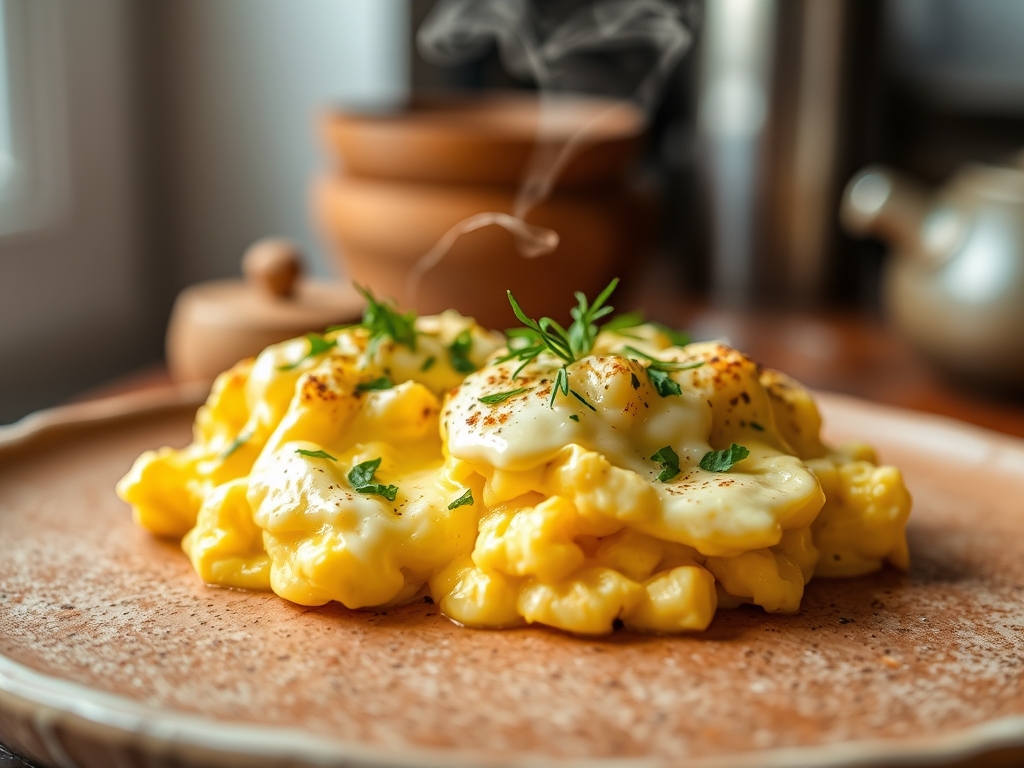
Stop treating your breakfast like a chore and start treating it like a structural engineering project. We are moving beyond the rubbery, sulfurous pucks of your childhood. We are here to master Soft Scrambled Eggs; a dish that is less about cooking and more about the delicate management of albumin moisture retention. Imagine a texture so viscous it borders on a custard, yet possesses enough structural integrity to hold its shape on a piece of sourdough. The sensory profile is a masterclass in subtlety. You want a pale, shimmering gold that lacks any hint of browning. The aroma should be pure, rich butter and fresh pasture, not the pungent tang of over-oxidized proteins. This is a high stakes game of thermodynamics where ten seconds is the difference between a Michelin star experience and a cafeteria disappointment. We are looking for small, tight curds that weep just enough moisture to create a natural sauce. It is time to audit your technique and rebuild your morning from the molecular level up.
THE DATA MATRIX
| Metric | Specification |
|---|---|
| Prep Time | 4 Minutes |
| Execution Time | 6 Minutes |
| Yield | 1 Serving |
| Complexity (1-10) | 7 |
| Estimated Cost per Serving | $1.45 |
THE GATHERS
Ingredient Protocol:
- 3 Large Pasture-Raised Eggs (approx. 150g / 5.3 oz)
- 15ml / 1 tbsp Heavy Cream (36% milkfat minimum)
- 14g / 1 tbsp Unsalted European Butter (82% butterfat)
- 1g / 0.25 tsp Fine Sea Salt
- 0.5g / 0.125 tsp White Pepper (to maintain visual purity)
- 5g / 1 tsp Fresh Chives (finely minced)
Section A: Ingredient Quality Audit:
If your eggs are aged, the chalazae will weaken and the whites will become watery, leading to a thin, lackluster curd. To fix this, use a digital scale to ensure your ratio of fat to protein is exact; adding an extra yolk can rescue thin whites by increasing the phospholipid count for better emulsification. If your butter has a high water content, it will steam the eggs rather than lubricating them. Always opt for European-style butter to ensure the lipid-to-moisture ratio favors a silky mouthfeel. If the eggs smell "eggy" before cooking, they are likely too old. Freshness is the primary infrastructure of flavor here.
THE MASTERCLASS
1. The Aeration Protocol
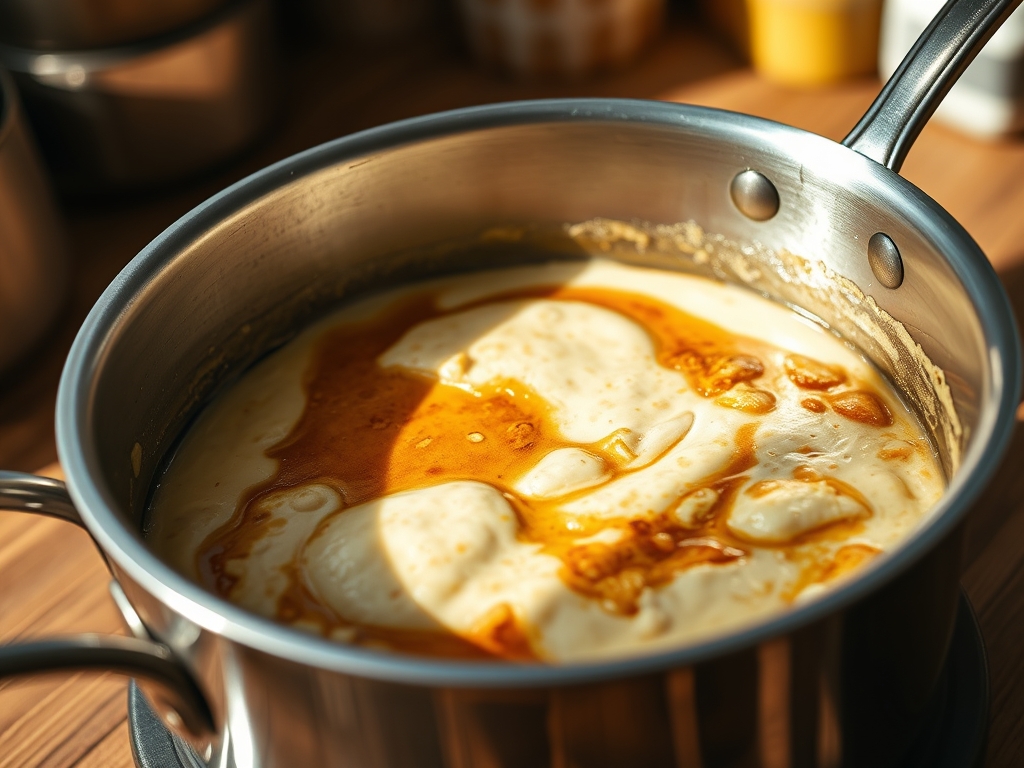
Crack your eggs into a stainless steel mixing bowl. Use a fork or a small whisk to aerate the mixture until no streaks of white remain. Do not over-beat; you are looking for a homogenous liquid, not a foam. Incorporate the heavy cream at this stage to provide a thermal buffer for the proteins.
Pro Tip: Use a digital scale to measure your cream. The precise weight ensures that the dilution of the egg proteins is consistent every time, preventing the "weeping" effect caused by over-hydration.
2. The Cold Start Integration
Place your butter in a cold 8-inch non-stick saucier. Pour the egg mixture over the cold butter. Starting from a cold pan allows the butter to melt and emulsify into the eggs as they rise in temperature, rather than simply sitting on top of them as a grease layer.
Pro Tip: A saucier is superior to a flat frying pan because the curved sides allow your spatula to reach every millimeter of the egg, preventing "dead zones" where the egg might overcook and brown.
3. Low Shear Agitation
Place the pan over medium-low heat. Use a high-heat silicone spatula to constantly agitate the eggs. You are looking to create "low shear" curds. This means moving the eggs frequently to prevent large sheets of protein from forming. You want tiny, delicate curds that resemble cottage cheese in size but silk in texture.
Pro Tip: Use a bench scraper to clean your silicone spatula periodically. This ensures that half-cooked bits do not fall back into the mix and ruin the uniform texture of your Soft Scrambled Eggs.
4. Thermal Management
As the eggs begin to thicken, move the pan on and off the heat every 30 seconds. This prevents the residual heat of the pan from skyrocketing. If the eggs start to steam aggressively, you are moving too fast. The goal is a slow, controlled thickening.
Pro Tip: Use an infrared thermometer to keep the pan surface between 145F and 155F. This is the "Goldilocks zone" where proteins denature without tightening into a rubbery matrix.
5. The Residual Carry-Over
Remove the pan from the heat when the eggs still look slightly underdone and "wet." The residual heat in the pan and the eggs themselves will finish the cooking process on the plate. Fold in your salt and chives at the very last second to prevent the salt from drawing out moisture prematurely.
Pro Tip: Pre-warm your serving plate in a low oven. Placing these delicate eggs on a cold ceramic plate will cause the fat to seize and the moisture to separate, destroying the emulsion you worked so hard to build.
Section B: Prep & Timing Fault-Lines:
The most common human error is the "Distraction Gap." If you turn away to butter toast, you lose the window of perfect coagulation. Your toast must be popped and ready before the eggs hit the pan. Another fault-line is the heat setting. If you see brown spots, your pan was too hot. This indicates the Maillard reaction has occurred, which is a failure in this specific protocol. Soft Scrambled Eggs should be an exercise in pure protein hydration, not caramelization.
THE VISUAL SPECTRUM
Section C: Thermal & Visual Troubleshooting:
Look closely at the Masterclass photo. Notice the lack of jagged edges and the presence of a soft, reflective sheen. If your eggs look matte or dull, you have overcooked them and driven off the moisture. If the curds are large and flat, you did not agitate the mixture frequently enough. If you see a puddle of water on the plate, the eggs have undergone syneresis; the protein network has tightened so much it squeezed out the liquid. To fix a dull appearance, stir in a tiny knob of cold butter at the very end to render a final gloss over the curds.
THE DEEP DIVE
Macro Nutrition Profile
A standard serving provides approximately 21g of protein, 24g of fat, and 2g of carbohydrates. The high fat content is essential for the slow-release energy profile and the absorption of fat-soluble vitamins A, D, and E found in the yolks.
Dietary Swaps
- Vegan: Use a mung-bean based egg substitute and vegan butter. Note that the "curd" will be firmer due to the lack of animal-based albumin.
- Keto: This recipe is naturally Keto-compliant. Increase the butter to 20g for a higher fat-to-protein ratio.
- GF: Ensure your "side of toast" is a high-quality gluten-free sourdough to maintain the structural contrast.
Meal Prep & Reheating Science
Soft scrambled eggs are notoriously difficult to reheat because the microwave vibrates water molecules, causing the delicate protein bonds to tighten instantly. If you must reheat, use a double boiler (bain-marie) and add a teaspoon of cream to re-moisturize the matrix.
THE KITCHEN TABLE
Why are my eggs watery on the plate?
This is syneresis. You overcooked the proteins, causing them to contract and squeeze out the moisture. Remove them from the heat much earlier than you think; residual heat is a powerful finishing tool.
Can I use milk instead of heavy cream?
Milk has a higher water-to-fat ratio. It will make the eggs fluffier but less creamy. For the true infrastructure of Soft Scrambled Eggs, the high lipid content of heavy cream is non-negotiable for the desired viscosity.
Why do I need to use white pepper?
Black pepper creates "specks" that some find visually disruptive in a perfect yellow field. White pepper provides the necessary piquant kick while maintaining the monochromatic aesthetic of the dish.
Is the cold start really necessary?
Yes. It allows the butter to melt into the egg proteins gradually. This creates a more stable emulsion and a creamier curd than dropping eggs into a hot, pre-melted pool of fat.