Welcome to the front lines of culinary physics, where we trade in the currency of long-chain carbohydrates and shear-thinning fluids. If you have ever stared into a pot of stewed greens and wondered why the liquid behaves like a sentient, elastic web, you are witnessing the raw power of exopolysaccharides. We are not just cooking dinner; we are conducting an Okra Mucilage Study. This is the audit of the "slime," that misunderstood rhamnogalacturonan and acetylated glucuronide complex that serves as the ultimate thickening agent in the plant kingdom. Forget the grainy, floury mouthfeel of a standard roux. We are hunting for that glass-like, viscous sheen that coats a spoon with the authority of a high-end motor oil. When handled with precision, this botanical glue transforms from a kitchen nightmare into a textural masterpiece. It is piquant, it is structural, and it is the backbone of deep-south and West African infrastructure. Strap in, because we are about to deconstruct the molecular architecture of the pod to achieve the perfect, non-stringy emulsion.
THE DATA MATRIX
| Metric | Specification |
|---|---|
| Prep Time | 20 Minutes |
| Execution Time | 45 Minutes |
| Yield | 4 Servings |
| Complexity (1-10) | 7 |
| Estimated Cost per Serving | $3.50 |
THE GATHERS
Ingredient Protocol:
- 500g / 1.1 lbs Fresh Young Okra (Small pods for lower lignin content)
- 30ml / 2 tbsp Neutral High-Smoke Point Oil (Grapeseed or Avocado)
- 150g / 1 cup Finely Diced Yellow Onion
- 3g / 1 tsp Smoked Paprika (High oil content preferred)
- 500ml / 2 cups Fortified Bone Broth or Rich Vegetable Stock
- 15ml / 1 tbsp Apple Cider Vinegar (To modulate pH levels)
- 5g / 1 tsp Flaky Sea Salt
- 2g / 0.5 tsp Fresh Cracked Black Pepper
Section A: Ingredient Quality Audit:
The primary failure point in any Okra Mucilage Study is the age of the specimen. If your pods are woody or snap with a dry, hollow sound, the cellulose has lignified beyond repair. This results in a "hairy" texture that no amount of simmering can fix. To audit this, perform a "bend test" on the tip of the pod; it should snap cleanly like a fresh green bean. If the exterior is dull or brown-spotted, the internal sugars have begun to ferment, which will compromise the viscosity of the final gel. If you are stuck with sub-par, fibrous okra, your technical fix is a high-speed blender pass followed by a fine-mesh chinois strain. This removes the structural debris while retaining the precious mucilage for your sauce base.
THE MASTERCLASS
1. The Precision Transverse Cut
Using a sharpened chef knife or a Japanese mandoline, slice the okra into 5mm rounds. The goal is to maximize the surface area exposure of the internal seeds and the mucilage-producing glands.
Pro Tip: Use a digital scale to ensure your yields are consistent. The science here is simple: more surface area equals more polysaccharide release. A precise cut prevents uneven cooking where some pieces render their thickener while others remain turgid and raw.
2. The High-Heat Thermal Shock
Place a heavy-bottomed saucier over medium-high heat. Add the oil and wait for the first sign of wispy smoke. Flash-sear the okra rounds in a single layer. Do not crowd the pan.
Pro Tip: This step uses the Maillard reaction to create flavor compounds that counter the "green" taste of the pods. By using a saucier with sloped sides, you allow steam to escape rapidly, preventing the okra from stewing in its own moisture too early.
3. Acidic Modulation and Deglaze
Once the okra shows golden-brown caramelization, add the onions and spices. After the onions soften, hit the pan with the apple cider vinegar to deglaze the fond.
Pro Tip: The vinegar is not just for flavor; it is a chemical regulator. Acid helps to "cut" the perceived sliminess by tightening the protein structures within the mucilage, making the liquid feel cleaner on the palate rather than stringy.
4. Controlled Hydration and Infusion
Slowly pour in the stock while whisking constantly. Lower the heat to a gentle simmer. This is where the Okra Mucilage Study reaches its peak, as the heat allows the starch granules to swell and burst, thickening the liquid.
Pro Tip: Use a silicone whisk to ensure you are scraping the bottom of the pan. This prevents the heavy polysaccharides from scorching, which would introduce a bitter, carbonized note to your pristine emulsion.
Section B: Prep & Timing Fault-Lines:
The most common human error is the "Cold Start" fallacy. Adding okra to cold liquid results in a ropey, unappealing texture that refuses to emulsify. Temperature control is your primary lever of success. If the liquid boils too violently, you will shear the long-chain molecules, causing the sauce to "break" and become watery. Maintain a steady 185F (85C) for optimal gelation. If you find your timing is off and the sauce is too thick before the vegetables are tender, do not add water; add a splash of warm stock to maintain the ionic balance of the solution.
THE VISUAL SPECTRUM
Section C: Thermal & Visual Troubleshooting:
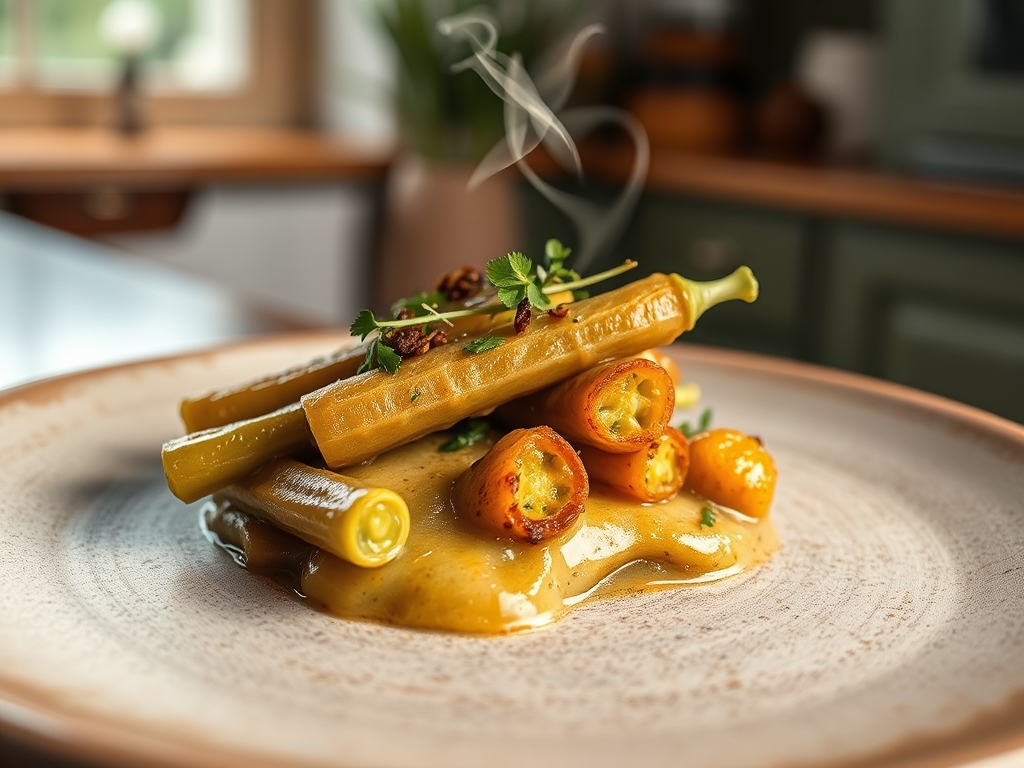
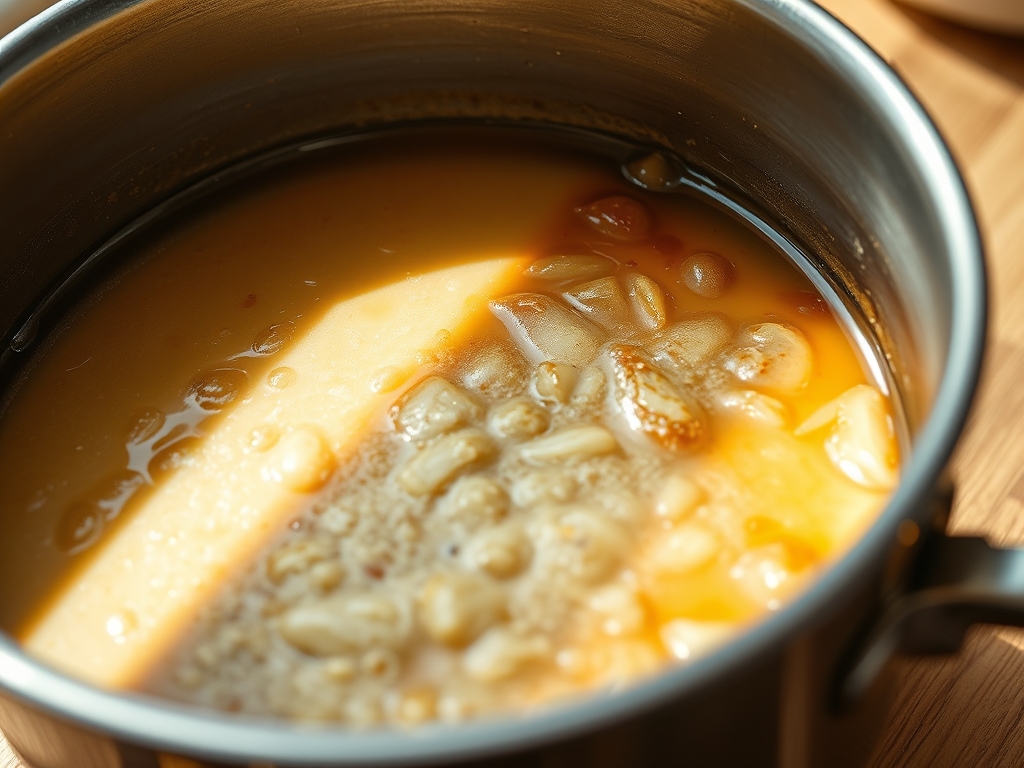
Referencing the Masterclass photo, your target visual is a deep, translucent amber with visible suspension of the okra seeds. If your dish looks "milky" or opaque, you have likely undercooked the mucilage or failed to properly render the fats. Dull, greyish-green colors indicate over-acidification or excessive cooking time which has degraded the chlorophyll. To fix a dull appearance, add a final "pop" of fresh herbs or a micro-dose of high-quality finishing oil to aerate the surface and catch the light. If the texture looks "clumpy" rather than smooth, use a bench scraper to move the solids to one side and whisk the liquid vigorously to re-incorporate the emulsion.
THE DEEP DIVE
Macro Nutrition Profile:
Okra is a micronutrient powerhouse with a negligible caloric footprint. A standard serving provides approximately 4g of fiber (mostly soluble), 2g of protein, and zero fat (excluding your cooking medium). It is exceptionally high in Vitamin K and Vitamin C, making it a functional food for bone health and immune support.
Dietary Swaps:
- Vegan: Use a rich mushroom dashi or kombu stock instead of bone broth to maintain the umami depth.
- Keto: This dish is naturally keto-friendly, provided you do not use flour-based thickeners. The okra provides all the viscosity you need.
- GF: Naturally gluten-free. It is the perfect alternative for those who cannot consume traditional wheat-based roux.
Meal Prep & Reheating Science:
Polysaccharide gels are notorious for "weeping" or syneresis when cooled. To reheat, avoid the microwave, which creates localized hot spots that destroy the molecular bonds. Instead, return the mixture to a saucier over low heat and add a tablespoon of water to re-hydrate the gel. Whisk gently as it warms to restore the original silkiness.
THE KITCHEN TABLE
Why is my okra sauce stringy instead of thick?
Stringiness occurs when the mucilage hasn't been properly emulsified with fat and acid. Ensure you sear the okra first and use an acidic component like vinegar or lemon juice to break those long, ropey molecular chains into a smooth velvet.
Can I use frozen okra for this study?
Yes, but be warned: freezing ruptures cell walls, leading to an immediate release of mucilage. Skip the searing step and go straight into a flavorful base, as frozen okra will never achieve the same structural "snap" as fresh pods.
How do I reduce the slime factor entirely?
If you want the flavor without the viscosity, cook the pods whole and very quickly. The mucilage is only released when the internal chambers are breached. High-heat roasting or frying whole pods keeps the "slime" locked inside the cellular walls.
Does the type of pan matter?
Absolutely. Use stainless steel or enameled cast iron. Reactive metals like unseasoned aluminum can turn the okra a disturbing shade of grey due to the reaction with the pod's natural polyphenols. Stick to inert surfaces for visual purity.