Stop squeezing the produce like you are trying to extract a confession. You are an auditor of cellular integrity; not a common grocer. When we talk about Feeling Fruit Ripeness; we are discussing the precise moment when pectins degrade and starches convert into a glorious; viscous slurry of sugars. It is the transition from a rigid; crystalline structure to a yielding; aromatic masterpiece. If you lack the tactile sensitivity to identify the exact millisecond a stone fruit reaches its peak; your culinary output will forever remain mediocre. This is not about soft spots or bruises. It is about the resistance of the skin against the pulp and the internal pressure of the juice against the cellular walls. We are hunting for that specific give that signals the fruit is ready to surrender its essence to the heat of the pan. Get your hands ready. We are moving beyond the visual and into the realm of pure; haptic feedback to create a compressed; caramelized fruit reduction that defies standard physics.
THE DATA MATRIX
| Metric | Specification |
|---|---|
| Prep Time | 20 Minutes |
| Execution Time | 45 Minutes |
| Yield | 4 Servings |
| Complexity (1-10) | 7 |
| Estimated Cost per Serving | $4.50 |
THE GATHERS
Ingredient Protocol:
- 500g / 4 units Large Peaches or Nectarines (Firm but yielding)
- 150g / 0.75 cup Granulated White Sugar
- 60ml / 0.25 cup Aged Balsamic Vinegar
- 5g / 1 tsp Flaky Sea Salt
- 2g / 0.5 tsp Freshly Cracked Black Pepper
- 30g / 2 tbsp Unsalted High-Fat Butter
- 5ml / 1 tsp Vanilla Bean Paste
- 3 sprigs Fresh Thyme (To infuse)
Section A: Ingredient Quality Audit:
If your fruit feels like a baseball; it is a structural failure. You cannot fix a total lack of sugar development. However; if you are stuck with under-ripe specimens; you can force a chemical transition by macerating them in the sugar for an extra hour at room temperature. This uses osmotic pressure to draw out moisture and soften the cell walls. Conversely; if the fruit is over-ripe and mushy; it will disintegrate into a jam rather than holding its shape. In this case; reduce your cook time by 40 percent and increase the acidity (lemon juice) to help the remaining pectin set.
THE MASTERCLASS
1. The Tactical Selection
Begin by Feeling Fruit Ripeness across your entire inventory. You are looking for a slight indentation that disappears slowly when pressed. Use a digital scale to ensure all fruit halves are within 10 grams of each other for uniform thermal penetration. Slice the fruit into clean halves; removing the stone with a bench scraper or paring knife to maintain clean edges.
Pro Tip: The science here is turgor pressure. A fruit with high turgor pressure is crunchy. As it ripens; enzymes like polygalacturonase break down the "glue" between cells. Selecting fruit at the 80 percent ripeness mark allows it to survive the high-heat sear without collapsing.
2. The Dry Sear and Maillard Initiation
Place a heavy-bottomed saucier or cast-iron skillet over medium-high heat. Do not add fat yet. Place the fruit cut-side down. We want to render the natural sugars into a dark amber crust. This is the Maillard reaction meeting caramelization. Watch for the edges to turn a deep mahogany.
Pro Tip: Using a dry pan initially prevents the fruit from "stewing" in its own juices. This intense; direct contact creates a caramelized barrier that locks internal moisture inside the fruit segment.
3. Deglazing and Infusion
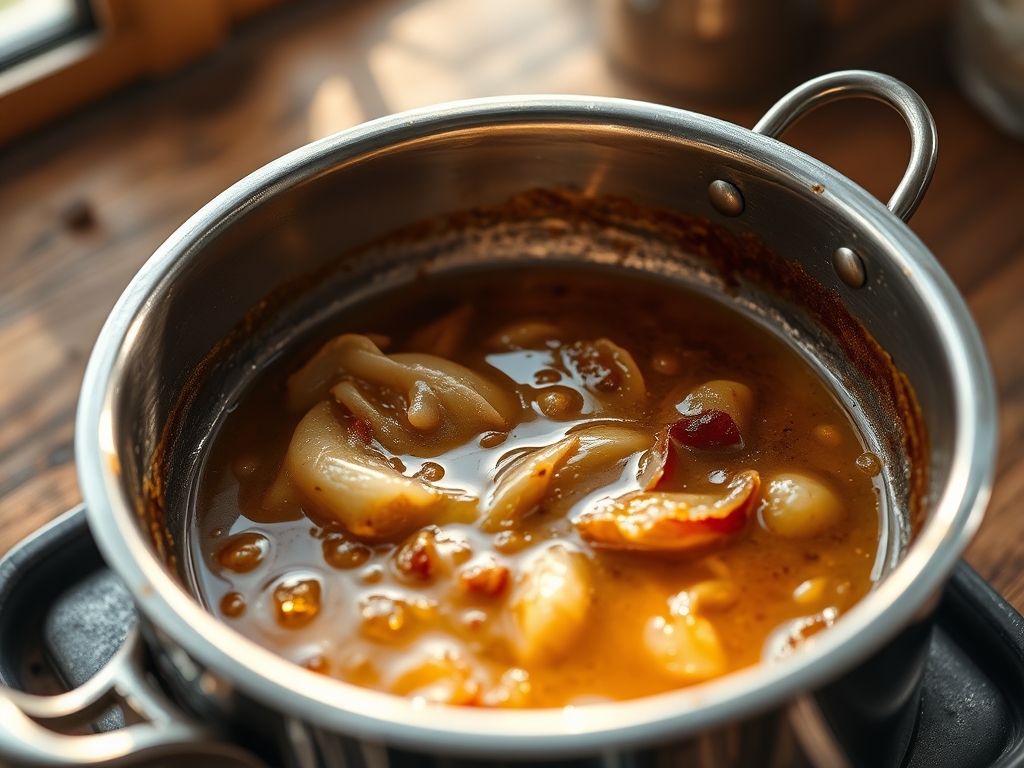
Once the crust is established; toss in the butter and thyme. As the butter begins to foam and brown (beurre noisette); add the balsamic vinegar to deglaze the pan. Use a whisk to aerate the fat and acid into a cohesive; viscous glaze. The steam will finish cooking the interior of the fruit without destroying the exterior shape.
Pro Tip: The acetic acid in the vinegar acts as a surfactant; helping to lift the flavorful browned bits (fond) from the bottom of the pan and incorporate them into the sauce.
4. Final Reduction and Glaze Coating
Lower the heat and add the vanilla bean paste. Spoon the bubbling liquid over the fruit repeatedly (arrosé technique). The sauce should reduce until it coats the back of a spoon. It should be piquant; sweet; and slightly savory from the thyme and pepper.
Pro Tip: Cold butter added at the very end (monter au beurre) creates a stable emulsion. The milk solids and fats suspend the vinegar droplets; resulting in a glossy; professional finish that won't break on the plate.
Section B: Prep & Timing Fault-Lines:
The most common failure is the "Panic Flip." If you move the fruit before the sugars have fully caramelized; the skin will tear and stick to the pan. Use a timer. Trust the heat. If your glaze becomes too thick or "tacky;" it has over-reduced. Immediately add 15ml of water or fruit juice to re-hydrate the sugars and restore the flow. Temperature control is king; if the butter smokes; you have moved past flavor and into carbonization. Pull the pan off the heat immediately.
THE VISUAL SPECTRUM
Section C: Thermal & Visual Troubleshooting:
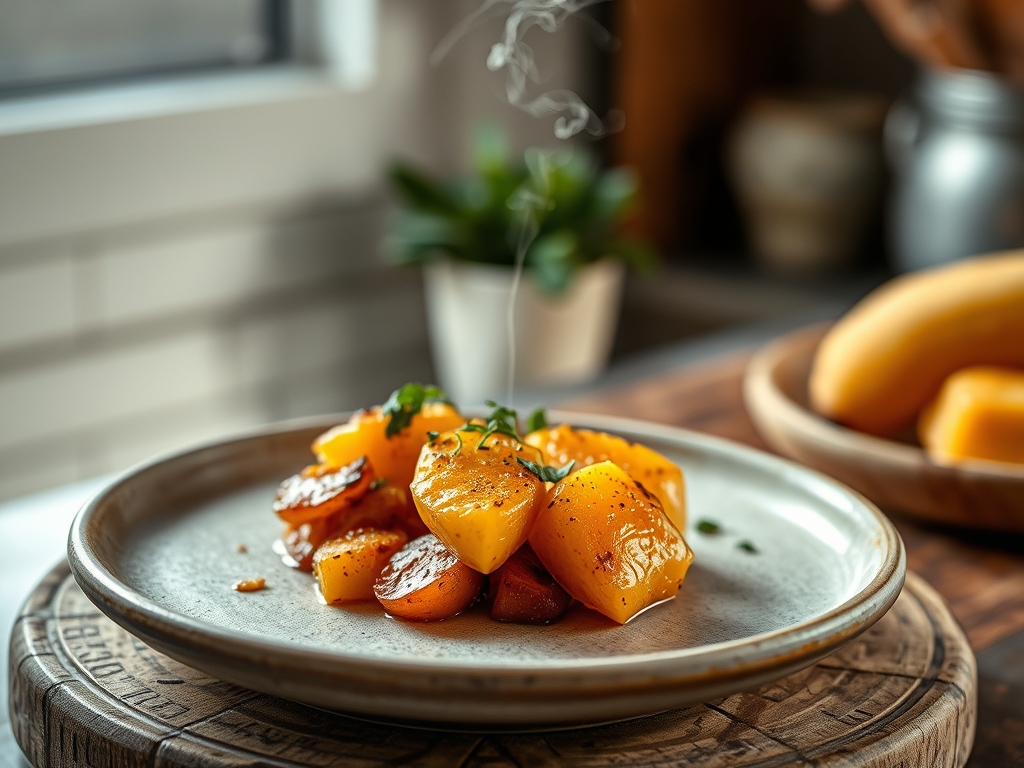
Look at the Masterclass photo. Notice the high-contrast transition from the charred edges to the vibrant; translucent orange of the fruit body. If your fruit looks dull or gray; you likely crowded the pan; which caused the temperature to drop and the fruit to steam rather than sear. If the glaze is "breaking" (oil separating from the liquid); your heat was too high during the final reduction. To fix a broken sauce; whisk in a teaspoon of warm water vigorously until the emulsion reforms. The final product should have a mirror-like sheen; reflecting the light as a sign of proper fat-to-sugar ratio.
THE DEEP DIVE
Macro Nutrition Profile
Per serving: 185 Calories; 6g Fat; 32g Carbohydrates; 1g Protein. This is a carbohydrate-heavy profile designed for rapid energy delivery and sensory satisfaction.
Dietary Swaps
- Vegan: Replace the butter with a high-quality refined coconut oil or a vegan buttery spread. Ensure the balsamic is a thick glaze style to maintain viscosity.
- Keto: This is difficult due to natural fruit sugars; but you can use firm berries and a sugar-free maple syrup substitute for the caramelization phase.
- GF: Naturally gluten-free. Ensure your vanilla paste does not use grain-based alcohols as a carrier.
Meal Prep & Reheating Science
To maintain the molecular structure; do not microwave. Reheat in a small pan over low heat with a tablespoon of water. This creates a mini-steam environment that softens the sugars without turning the fruit into a mushy pulp. The goal is to gently vibrate the molecules back into a fluid state without breaking the pectin bonds further.
THE KITCHEN TABLE
How do I know if the fruit is too ripe?
If the skin wrinkles when you touch it; the cellular structure has collapsed. It is better for a coulis than a sear. Feeling Fruit Ripeness requires a firm; elastic response from the fruit wall.
Why use black pepper in a fruit dish?
Black pepper contains piperine; which cuts through the heavy sugars and adds a sophisticated "back-of-the-throat" heat. It provides a savory bridge that makes the fruit feel like a composed dish rather than a snack.
Can I use frozen fruit for this?
Absolutely not. Freezing creates ice crystals that puncture cell walls. Upon thawing; the fruit loses all structural integrity. For this technical execution; only fresh; never-frozen specimens will survive the high-heat compression.
What is the best pan for this?
Stainless steel or cast iron. Non-stick pans cannot reach the temperatures required for a proper Maillard reaction on wet fruit. You need the "stick" to create the crust; followed by the deglaze to release it.