The scent of scorched flour and blossoming yeast is the siren song of a kitchen functioning at peak efficiency. When you slide a raw disk of dough onto a preheated ceramic surface, you are not merely cooking; you are initiating a high-stakes energy transfer. This is the realm of Pizza Stone Conduction, where the thermal mass of the stone acts as a capacitor, discharging intense, dry heat directly into the bottom of your flatbread. This immediate surge of energy causes the gases within the dough to expand violently, creating that coveted "oven spring" and a structural lattice that is both airy and resilient. Without this foundational heat, your bread is destined to be a flaccid, pale imitation of artisanal excellence. We are looking for that specific leopard-spotting on the underbelly, a sign that the Maillard reaction has been pushed to its flavorful limit. It is the difference between a soggy, dense crumb and a crisp, charred masterpiece that shatters upon impact. Let us audit the process and optimize your thermal output for maximum crust integrity.
THE DATA MATRIX
| Metric | Specification |
|---|---|
| Prep Time | 20 Minutes (plus 24-hour cold ferment) |
| Execution Time | 8 Minutes |
| Yield | 4 Individual Flatbreads |
| Complexity (1-10) | 7 |
| Estimated Cost per Serving | $1.25 |
THE GATHERS
Ingredient Protocol:
- 500g / 3.75 cups "00" High-Protein Flour
- 325ml / 1.35 cups Filtered Water (65 degrees F)
- 10g / 2 tsp Fine Sea Salt
- 3g / 1 tsp Active Dry Yeast
- 15ml / 1 tbsp Extra Virgin Olive Oil
Section A: Ingredient Quality Audit:
If your flour lacks the requisite protein content (below 12%), your gluten network will fail to aerate properly, resulting in a flatbread that lacks structural loft. To fix this, supplement with 10g of vital wheat gluten. If your yeast is sluggish, it may be due to chlorine in your tap water; always use filtered water to ensure the yeast can infuse the dough with carbon dioxide without chemical interference. If the dough feels too viscous or sticky, do not dump in more flour. Instead, perform a series of "stretch and folds" to organize the protein strands without densifying the crumb.
THE MASTERCLASS
1. The Thermal Saturate
Place your pizza stone on the middle rack of a cold oven and crank the heat to its maximum setting (usually 500 or 550 degrees F). Allow the stone to heat for at least 60 minutes. This ensures the core of the stone has reached thermal equilibrium.
Pro Tip: Use an infrared thermometer to verify the surface temperature. Pizza Stone Conduction relies on the stone being hotter than the ambient air to achieve a rapid render of moisture from the bottom crust.
2. The Hydration Phase
In a large mixing bowl, combine your water and yeast. Slowly incorporate the flour using a digital scale for precision. Once a shaggy mass forms, add the salt and oil. Use a bench scraper to manage the dough on your work surface, folding it until it becomes smooth and elastic.
Pro Tip: Salt is a fermentation regulator. Adding it too early can kill yeast cells; adding it after the initial autolyse allows the flour to fully hydrate and the enzymes to begin their work.
3. The Cold Ferment Strategy
Place the dough in a lightly oiled container and refrigerate for 24 to 72 hours. This slow fermentation allows the yeast to produce complex esters and organic acids, which provide a piquant depth of flavor that a quick rise simply cannot replicate.
Pro Tip: Cold temperatures slow down yeast activity but allow enzymes to break down starches into simple sugars. This increases the potential for a deep, mahogany Maillard reaction during the bake.
4. The Launch and Expansion
Divide the dough into four equal portions. Gently stretch each ball into a circle, being careful not to deflate the air pockets at the edges. Use a wooden peel dusted with semolina to slide the dough onto the preheated stone.
Pro Tip: The semolina acts like ball bearings, preventing the dough from sticking. Professional chefs use a saucier to prepare any toppings beforehand so the dough does not sit on the peel for more than 30 seconds.
Section B: Prep & Timing Fault-Lines:
The most common failure in flatbread production is "The Cold Stone Trap." If you launch dough before the stone has fully saturated with heat, you will get a "dead" crust with no bottom char. Another timing error is over-proofing the dough at room temperature; if the dough becomes too bubbly and weak, it will collapse when it hits the heat. Monitor your bulk fermentation closely; the dough should look energized and supple, not like a deflating balloon.
THE VISUAL SPECTRUM
Section C: Thermal & Visual Troubleshooting:
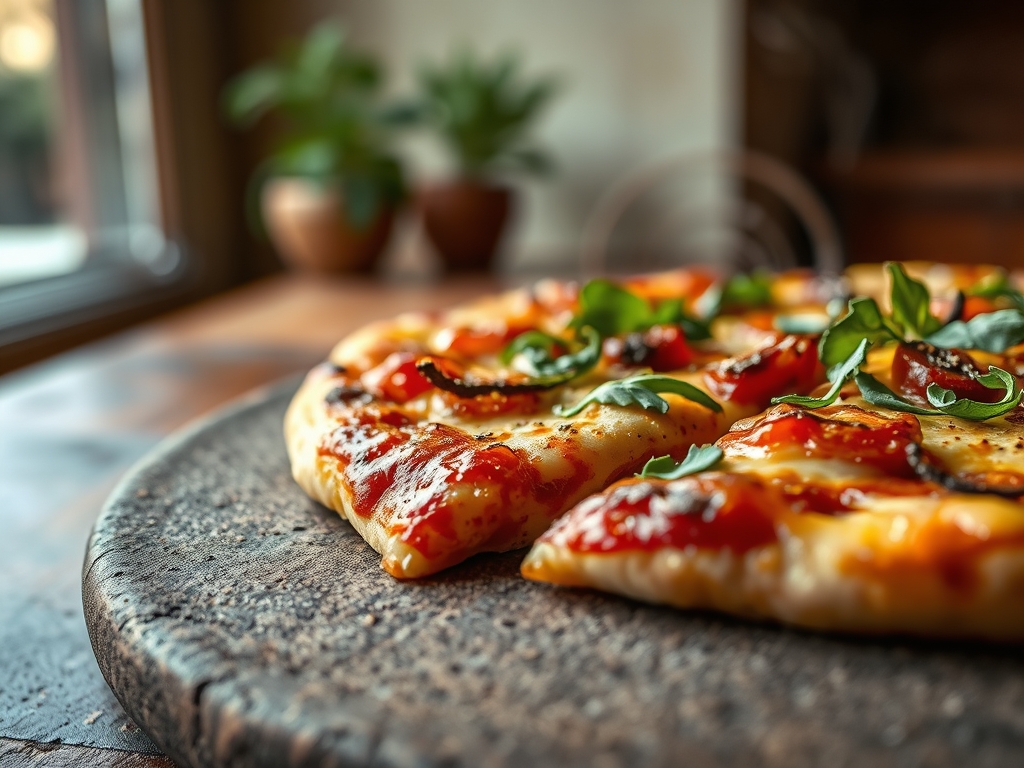
Referencing our Masterclass photo, look for the "Leopard Spotting" (small, dark charred circles) on the rim of the bread. If your bread is a uniform, dull tan, your oven temperature is too low or your stone lacks sufficient mass. If the top is burning before the bottom is crisp, move your stone to a lower rack to maximize conduction and minimize convection. If the center of the flatbread is soggy, you likely overloaded it with moisture-heavy toppings. Always render the fat out of meats and squeeze the liquid from fresh mozzarella before assembly to protect the integrity of the base.
THE DEEP DIVE
Macro Nutrition Profile:
Each flatbread provides approximately 450 calories, 12g of protein, 85g of carbohydrates, and 6g of fat. The long fermentation process significantly lowers the glycemic index compared to "quick" breads, as the yeast consumes much of the simple sugars.
Dietary Swaps:
- Vegan: This recipe is naturally vegan. Ensure your stone is seasoned only with high-smoke-point vegetable oils if necessary.
- Keto: Replace wheat flour with a blend of almond flour, vital wheat gluten, and xanthan gum. Note that conduction will be less effective as these flours do not "spring" the same way.
- GF: Use a high-quality 1-to-1 gluten-free baking flour. You will need to increase hydration by 10% to prevent a gritty texture.
Meal Prep & Reheating Science:
To maintain the molecular structure of the crust, never reheat flatbread in a microwave. The electromagnetic waves agitate water molecules, turning the starch "retrograde" and making it rubbery. Instead, reheat on a dry skillet over medium heat or back on a pizza stone at 400 degrees F to re-crisp the bottom via conduction.
THE KITCHEN TABLE
Why is my dough snapping back when I stretch it?
Your gluten is too tense. Allow the dough to rest at room temperature for 20 minutes. This allows the protein bonds to relax, making the dough more extensible and easier to shape without tearing.
Can I use a baking sheet instead of a stone?
A baking sheet lacks the thermal mass of a stone. It will lose heat the moment the dough touches it. If you must use one, flip it upside down to allow for better airflow and preheat it thoroughly.
Does the type of stone matter for conduction?
Cordierite stones are superior because they handle thermal shock better than ceramic. They can withstand the rapid temperature change of a cold dough hitting a 500-degree surface without cracking or losing heat efficiency.
How do I get a more "open" crumb structure?
Increase your hydration levels and handle the dough as gently as possible during the final shaping. You want to preserve the carbon dioxide bubbles created during the long ferment, as these expand during the initial bake.