Listen to that sound. It is not just a crackle; it is the sonic signature of a phase transition occurring at three hundred and fifty degrees Fahrenheit. When cold batter meets screaming hot oil, we are witnessing a violent, beautiful architectural event. This is the realm of the vapor lock. We are not merely frying; we are engineering a lattice of dehydrated starch that must remain structurally sound while encasing a delicate interior. To achieve the perfect shatter, you need more than a recipe. You need the Tempura Crunch Data. This dataset dictates the exact ratio of carbonation to protein and the precise thermal delta required to prevent oil ingress. If your batter is a soggy, leaden shroud, your infrastructure has failed. We are here to audit your technique and rebuild your frying station from the floor up. We are looking for that specific, ethereal lightness that defies gravity. Prepare to calibrate your senses to the frequency of high-tensile crunch. We are moving beyond the home cook's guesswork into the rigorous world of culinary physics.
THE DATA MATRIX
| Metric | Specification |
|---|---|
| Prep Time | 10 Minutes |
| Execution Time | 15 Minutes |
| Yield | 4 Servings |
| Complexity (1-10) | 7 |
| Estimated Cost per Serving | $1.45 |
THE GATHERS
Ingredient Protocol:
- 250ml / 1 cup All-Purpose Flour (low protein preferred)
- 250ml / 1 cup Ice-Cold Sparkling Water
- 1 Large Egg Yolk (cold)
- 15g / 1 tbsp Cornstarch or Potato Starch
- 5g / 1 tsp Baking Powder
- 2g / 0.5 tsp Fine Sea Salt
- 1 Liter / 4 cups Neutral High-Smoke Point Oil (Grapeseed or Peanut)
Section A: Ingredient Quality Audit:
The primary failure point in most frying operations is protein development. If your flour is too high in protein, the mechanical action of mixing will create gluten; this results in a bread-like chew rather than a crystalline snap. Audit your flour. If it feels heavy, cut it with 20% cornstarch to lower the overall protein density. Furthermore, your sparkling water must be aggressively carbonated and borderline frozen. The CO2 bubbles act as leavening agents that aerate the batter instantly upon contact with heat. If your water is flat, your crunch is dead on arrival. Finally, check your oil age. Old oil contains polar molecules that attach to the food, causing it to render greasy rather than crisp. Use fresh, filtered oil for every high-stakes crunch session.
THE MASTERCLASS
Step 1: Thermal Stabilization
Place your mixing bowl inside a larger bowl filled with ice. Use a digital scale to measure your dry ingredients precisely. Sift the flour, starch, and baking powder together twice to ensure maximum aeration. Cold temperatures are non-negotiable because they inhibit gluten formation and maximize the thermal shock when hitting the fryer.
Pro Tip: Keeping the batter at 40 degrees Fahrenheit ensures that the moisture evaporates instantly in the oil, creating a "vapor lock" that prevents oil from soaking into the starch.
Step 2: The Carbonation Infusion
Whisk the egg yolk into the ice-cold sparkling water using a saucier or a small whisk. Do not overbeat; you only want to break the yolk. Pour this liquid into the dry ingredients all at once. Use a pair of chopsticks to "stab" and stir the mixture for no more than 15 seconds. Lumps are your friends here.
Pro Tip: Over-mixing is the enemy of the Tempura Crunch Data. Those small lumps of dry flour create pockets of varied texture that enhance the mouthfeel and structural integrity of the crust.
Step 3: Oil Calibration and Surface Tension
Heat your oil in a heavy-bottomed pot until it reaches exactly 350 degrees Fahrenheit. Use an infrared thermometer to verify. Before dipping your protein, flick a small drop of batter into the oil. It should sink slightly and then immediately rocket to the surface with a furious hiss.
Pro Tip: If the batter sinks and stays, your oil is too cold, leading to oil absorption. If it browns instantly, the interior will remain raw. Balance the BTU output to maintain a steady 350.
Step 4: The Dip and Release
Dry your vegetables or seafood thoroughly with a bench scraper or paper towels. Dredge lightly in plain starch, shake off the excess, then dip into the cold batter. Lower the items into the oil away from your body. Do not crowd the pot; overcrowding drops the oil temperature and ruins the resonance.
Pro Tip: The starch pre-coat acts as a primer, allowing the viscous batter to adhere to the surface without sliding off during the initial steam release.
Section B: Prep & Timing Fault-Lines:
Human error usually manifests in the "wait time." If you mix your batter and let it sit for twenty minutes while you prep your shrimp, the carbonation will dissipate and the flour will hydrate, turning your batter into a gluey mess. This is a "just-in-time" manufacturing process. You must have your oil at temperature and your ingredients staged before the liquid touches the flour. If you miss your window, discard the batter and start over. The cost of flour is negligible compared to the cost of a ruined meal.
THE VISUAL SPECTRUM
Section C: Thermal & Visual Troubleshooting:
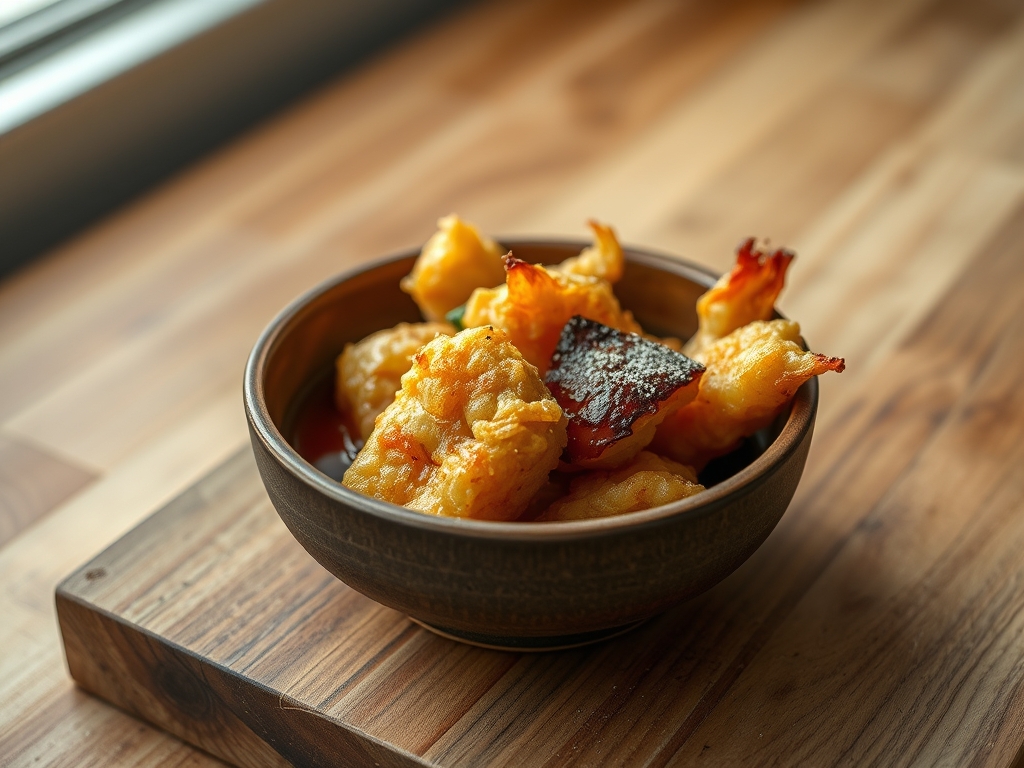
Look at the Masterclass photo. Notice the pale, golden hue and the jagged, "lacy" edges. If your result is a uniform, dark brown, you have likely experienced an excessive Maillard reaction due to high sugar content or old oil. If the texture is smooth like a corn dog, you over-mixed the batter and activated the gluten. To achieve that "tenkasu" (crunchy bits) effect seen in the image, you can flick extra droplets of batter onto the frying items as they cook. This creates a secondary layer of crunch. If the coating is falling off, your "primer" (the dry starch dredge) was either too thick or non-existent. The goal is a translucent, glass-like shell that reveals the color of the ingredient beneath it.
THE DEEP DIVE
Macro Nutrition Profile:
Tempura is deceptively light but remains a calorie-dense preparation. A standard serving contains approximately 320 calories, 18g of fat, and 35g of carbohydrates. The "crunch" comes from the rapid dehydration of the batter, meaning the fat content is largely on the surface rather than absorbed into the core.
Dietary Swaps:
- Vegan: The egg yolk provides color and emulsification; replace it with 1 tablespoon of aquafaba for a similar structural result.
- Gluten-Free: Replace all-purpose flour with a 50/50 mix of white rice flour and cornstarch. This actually produces an even crispier result as rice flour has zero gluten potential.
- Keto: This is difficult, but a mixture of unflavored whey protein isolate and crushed pork rinds can mimic the texture, though the "vapor lock" mechanics will differ.
Meal Prep & Reheating Science:
Never microwave tempura. The microwave excites water molecules inside the food, which then migrate outward and turn the crust into a soggy sponge. To maintain molecular structure, reheat in a 400-degree oven on a wire rack for 4 minutes. This allows hot air to circulate and re-crisp the starch lattice.
THE KITCHEN TABLE
Why is my tempura soggy after five minutes?
Residual steam from the interior ingredient is migrating outward. To prevent this, ensure your ingredients are bone-dry before battering and never stack fried items. Place them on a wire cooling rack to allow steam to escape from all sides.
Can I use beer instead of sparkling water?
Yes. Beer adds a piquant flavor and contains proteins that aid in browning. However, the alcohol evaporates faster than water, which can actually lead to an even crispier, more fragile crust.
What is the best oil for this?
Peanut oil is the gold standard for its high smoke point and neutral profile. If allergies are a concern, use grapeseed or canola oil. Avoid olive oil; its low smoke point will infuse the batter with bitter notes.
How do I get those "spiky" bits on the outside?
This technique is called "hanafuku." As the item fries, use your fingers or a spoon to drizzle extra batter directly onto the submerged food. The new batter will fuse to the cooking crust, creating an increased surface area.