The kitchen is no longer a domestic sanctuary; it is a high-velocity testing ground where thermal dynamics meet acoustic precision. You are not merely making a snack; you are orchestrating a phase transition that rivals any laboratory pressure vessel. The process begins with a low hum, the sound of oil reaching its smoke point, and then the first sharp crack signals the commencement of the event. Hearing Popping Corn is the primary diagnostic tool for the culinary engineer. It provides real-time data on the internal moisture pressure of the Zea mays everta. As the starch granules undergo rapid gelatinization and then instantaneous expansion, the frequency of the pops accelerates into a frantic staccato. This is the "popcorn curve," a peak in acoustic energy that tells you exactly when the starches have reached maximum aeration. If you miss the cadence, you risk carbonizing the delicate hulls. Listen closely. The rhythm dictates the quality of the final matrix. We are looking for a consistent, rapid-fire sequence that signifies total systemic success before the inevitable silence of completion.
THE DATA MATRIX
| Metric | Specification |
|---|---|
| Prep Time | 2 Minutes |
| Execution Time | 5 Minutes |
| Yield | 4 Liters / 16 Cups |
| Complexity (1-10) | 3 |
| Estimated Cost per Serving | $0.15 |
THE GATHERS
Ingredient Protocol:
- 100g / 0.5 cup Premium Yellow Butterfly Popcorn Kernels
- 45ml / 3 tbsp High-Smoke Point Oil (Grapeseed or Avocado)
- 15g / 1 tbsp Clarified Butter (Ghee) for post-pop infusion
- 5g / 1 tsp Fine-Grain Sea Salt (Micro-milled for adhesion)
- 2g / 0.5 tsp Nutritional Yeast (Optional for umami depth)
Section A: Ingredient Quality Audit:
The most common failure point in this infrastructure is "stale" inventory. Popcorn relies on a precise internal moisture content of approximately 14 percent. If your kernels are stored in a non-hermetic environment, they dehydrate. This results in "old maids" or unpopped kernels that fail to reach the critical pressure threshold. To fix this, you can attempt to rehydrate the kernels by adding a teaspoon of water to the storage jar and shaking it daily for a week. Furthermore, using a low-smoke point oil like extra virgin olive oil will result in the oil breaking down and becoming viscous and bitter before the kernels even reach popping temperature. Always audit your fats for thermal stability.
THE MASTERCLASS
Step 1: Thermal Priming and Oil Calibration
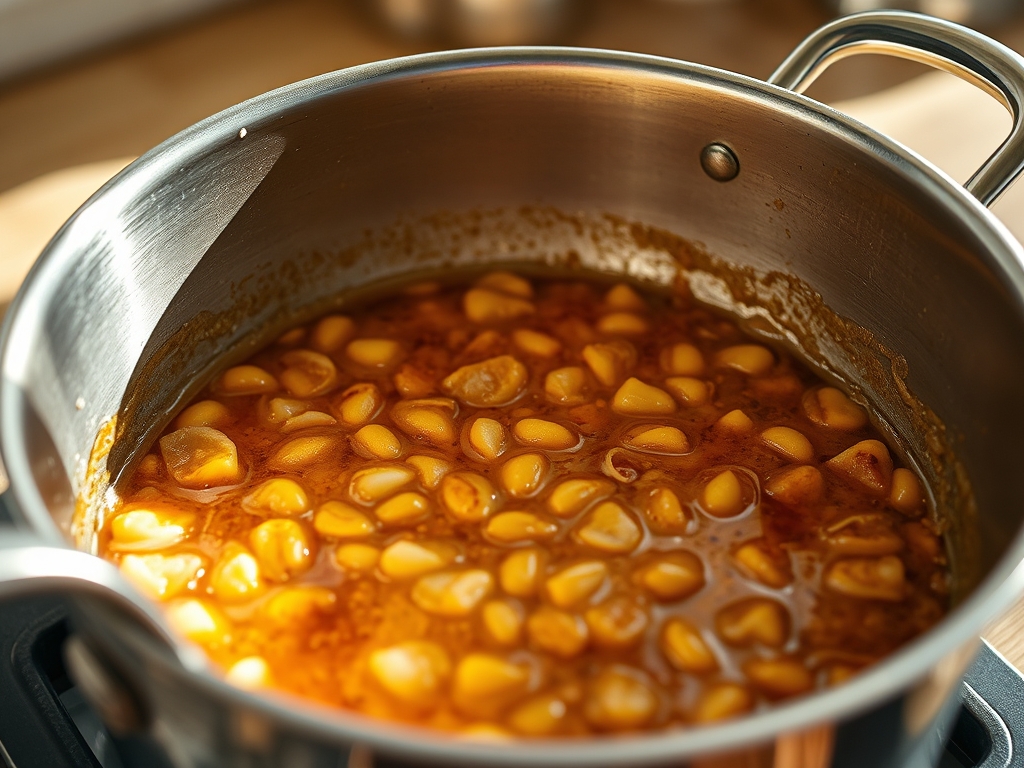
Place your 3-quart stainless steel saucier on the induction hob. Add the 45ml of high-smoke point oil and exactly three "test" kernels. Set the heat to medium-high. The goal here is to infuse the oil with heat evenly. When those three kernels pop, your oil has reached the target temperature of 180 degrees Celsius.
Pro Tip: Using a saucier with curved sides rather than a straight-sided pot allows for better steam circulation and easier agitation. This geometry prevents kernels from getting trapped in "dead zones" where they might scorch.
Step 2: Loading the Reactor
Once the test kernels have detonated, pour in the remaining 100g of kernels in a single layer. Use a digital scale to ensure you are not overloading the vessel; overcrowding leads to uneven heat distribution and a high failure rate. Cover the pot with a vented lid or a slightly offset standard lid to allow steam to escape.
Pro Tip: Steam is the enemy of crispness. By allowing the vapor to aerate and exit the vessel, you prevent the popped starch from becoming rubbery. Professional chefs often use a fine-mesh splatter screen to maximize moisture release.
Step 3: Acoustic Monitoring and Agitation
As you begin Hearing Popping Corn, start a rhythmic shaking motion. Keep the vessel in constant contact with the heat source while sliding it back and forth. This ensures that unpopped kernels migrate to the bottom while the lighter, expanded starch rises to the top.
Pro Tip: This is a kinetic energy play. Constant motion prevents the render of the oil from pooling in one spot, which ensures every kernel is coated in a thin, conductive film of fat for maximum heat transfer.
Step 4: The Deceleration Phase
When the frequency of pops slows to roughly one every two seconds, immediately remove the vessel from the heat. The residual thermal energy in the base of the pan is sufficient to finish the remaining kernels without burning the ones at the bottom.
Pro Tip: Use a bench scraper to quickly move the popped corn into a wide stainless steel bowl. This stops the cooking process instantly and prevents the bottom layer from absorbing excess oil.
Step 5: The Lipid Infusion and Seasoning
While the popcorn is still emitting steam, drizzle the 15g of clarified butter over the batch while tossing vigorously. Immediately follow with the 5g of fine-grain salt. The residual heat allows the salt to bond to the lipid coating through surface tension.
Pro Tip: Clarified butter is essential because the milk solids and water have been removed. This means it won't make your popcorn soggy. Use a microplane if you wish to add hard cheeses like Parmesan for a piquant finish.
Section B: Prep & Timing Fault-Lines:
Timing is the most volatile variable in this protocol. If you wait too long after the popping slows, the sugar and protein structures in the corn will undergo an over-extended Maillard reaction, turning the flavor profile from nutty to acrid. If the heat is too low, the internal pressure builds too slowly, resulting in "chewy" popcorn that hasn't fully ruptured its cellular walls. Always use a high-output burner to ensure a rapid phase change.
THE VISUAL SPECTRUM
Section C: Thermal & Visual Troubleshooting:
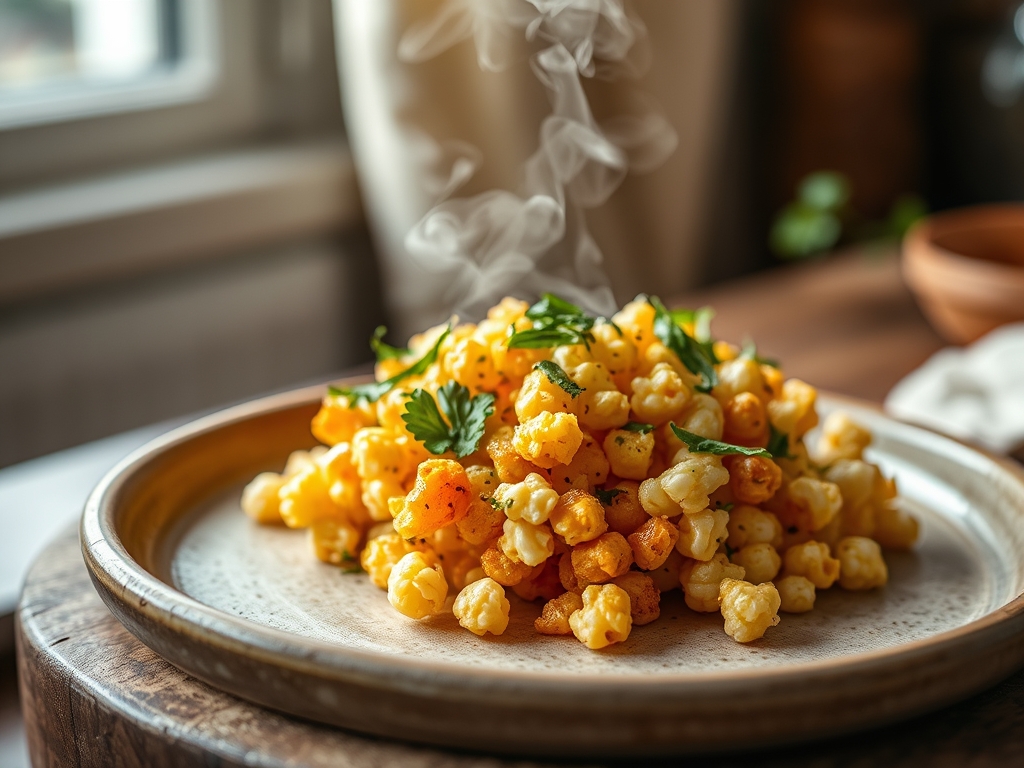
Referencing the Masterclass photo, you should observe a bright, snowy white expansion with minimal "shrapnel" or broken pieces. If your popcorn appears dull or grey, your oil was likely oxidized or dirty. If the edges are dark brown before you have seasoned them, your heat was too high or your agitation was insufficient. Uneven browning usually indicates that the kernels were not in a single layer during the priming phase. The ideal visual cue is a consistent, matte texture across the entire batch, indicating that the starch has been perfectly aerated and dried by the escaping steam.
THE DEEP DIVE
Macro Nutrition Profile
Popcorn is a whole grain powerhouse. A standard 4-cup serving provides approximately 120 calories, 4 grams of fiber, and 3 grams of protein. The glycemic load is relatively low, provided you do not saturate the matrix with excessive sucrose or heavy fats.
Dietary Swaps
- Vegan: Replace clarified butter with refined coconut oil or a high-quality extra virgin olive oil added post-pop for flavor.
- Keto: Minimize the portion size as corn is a carbohydrate; however, increase the healthy fats like avocado oil to improve the satiety index.
- Gluten-Free: Popcorn is naturally gluten-free, but ensure your seasonings are not processed in facilities with wheat.
Meal Prep & Reheating Science
To maintain the molecular structure of popped corn, store it in an airtight glass container at room temperature. To revive day-old popcorn, spread it on a sheet pan and place it in a 150 degree Celsius oven for 3 minutes. This evaporates any absorbed atmospheric moisture and re-crisps the starch walls.
THE KITCHEN TABLE
Why does my popcorn always have unpopped kernels?
This is usually a moisture issue. If kernels are too dry, they lack the steam pressure to explode. Try the rehydration method or source fresher kernels from a high-turnover supplier to ensure optimal internal PSI.
Can I use a microwave instead of a saucier?
You can, but you lose the ability to conduct a "thermal soak" in oil. Stovetop methods provide better heat transfer and a superior crunch because the oil helps fry the starch as it expands.
What is the best oil for maximum flavor?
Coconut oil is the cinema standard. It has a high smoke point and a subtle sweetness that complements salt. For a more neutral profile, use grapeseed oil to let the corn flavor dominate.
How do I get the salt to actually stick?
The secret is particle size. Regular table salt is too heavy. Use a spice grinder to turn your salt into a fine powder. It will then adhere to the oil film through electrostatic forces.
Why is my popcorn tough and chewy?
Steam entrapment is the culprit. If you keep the lid tightly sealed, the steam saturates the popped kernels. Always leave the lid slightly ajar or use a vented cover to let the moisture escape immediately.