Stop treating your fruit like a soft, yielding afterthought. If you want to master the architecture of a dessert that fights back, you must respect the sclereid. These are the lignified cells that give a Bosc or Anjou its signature structural integrity; what we colloquially call Crisp Pear Grit. It is not a flaw. It is a feature. In this audit of culinary infrastructure, we are going to harness that stone-cell density to create a poached and seared masterpiece that maintains its crystalline snap even after a high-heat encounter with a copper saucier. We are looking for a texture that bridges the gap between a velvet-smooth reduction and the structural resistance of a perfectly ripened pome. Forget the mushy, over-boiled specimens of your childhood. We are engineering a dish where the thermal application serves only to intensify the natural sugars while preserving the mechanical crunch of the cell walls. This is high-stakes fruit management. Prepare your digital scales and sharpen your paring knives; we are about to optimize the Crisp Pear Grit into a high-performance gastronomic asset.
THE DATA MATRIX
| Metric | Specification |
|---|---|
| Prep Time | 25 Minutes |
| Execution Time | 40 Minutes |
| Yield | 4 Servings |
| Complexity (1-10) | 7 |
| Estimated Cost per Serving | $4.25 |
THE GATHERS
Ingredient Protocol:
- 4 Large Bosc Pears (Firm-ripe) / approx. 800g
- 500ml / 2 cups Dry White Wine (Chenin Blanc or Riesling)
- 200g / 1 cup Granulated Sugar
- 1 Stick Cinnamon (Cassia) / 5g
- 3 Star Anise Pods / 2g
- 15ml / 1 tbsp Lemon Juice
- 50g / 3.5 tbsp Unsalted High-Fat Butter
- 2g / 0.5 tsp Flaked Sea Salt
- 5ml / 1 tsp Pure Vanilla Bean Paste
Section A: Ingredient Quality Audit:
The primary failure point in this protocol is the "Mealy Pear Syndrome." If your fruit yields to thumb pressure before you even begin, the pectin chains have already degraded. You cannot reconstruct Crisp Pear Grit once the internal cell pressure (turgor) is lost. To fix this, select pears that are "green" or just beginning to turn; the fruit should feel like a baseball, not a sponge. If you are forced to use overripe fruit, a 20-minute soak in a cold calcium chloride bath (pickle crisp) can help reinforce the cell walls, though it is a poor substitute for proper raw material selection. Furthermore, ensure your wine is high in acidity. A low-acid wine will fail to infuse the fruit properly, resulting in a flat, one-dimensional flavor profile that lacks the piquant edge necessary to balance the dense sugars.
THE MASTERCLASS
Step 1: The Precision Peel and Core
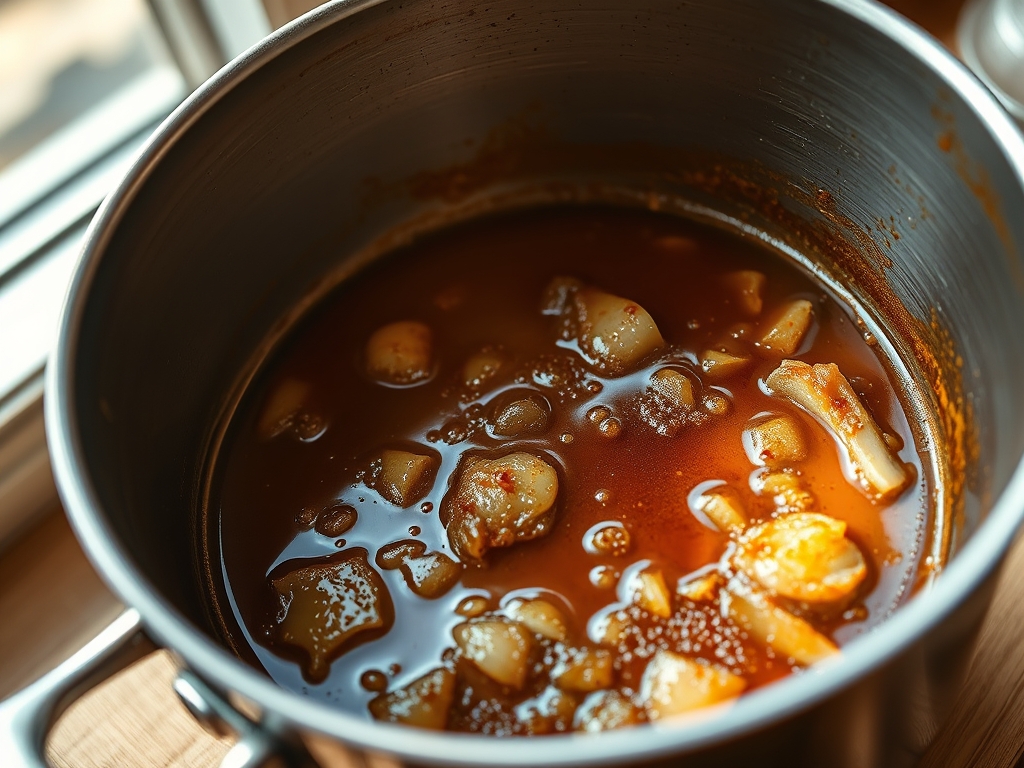
Utilize a high-carbon steel paring knife or a professional-grade Y-peeler to remove the epidermis of the pear while maintaining the structural curve. Use a melon baller to remove the core from the bottom, creating a hollow chamber for heat distribution.
Pro Tip: Leaving the stem intact is not just aesthetic; it acts as a heat sink and a structural handle. By keeping the core cavity uniform, you ensure that the poaching liquid can aerate the interior of the fruit, preventing the center from becoming a thermal dead zone while the exterior overcooks.
Step 2: The Acidified Poaching Run
In a heavy-bottomed saucier, combine the wine, sugar, lemon juice, and aromatics. Bring to a simmer (85C / 185F) before submerging the pears. Use a parchment paper cartouche (a circular lid with a hole) to keep the fruit submerged and prevent oxidation.
Pro Tip: This is where we stabilize the Crisp Pear Grit. The acidic environment prevents the hemicellulose in the cell walls from dissolving too quickly. Use a digital scale to ensure your sugar-to-liquid ratio is exact; an over-concentrated syrup will draw moisture out of the fruit via osmosis, toughening the exterior excessively.
Step 3: The Maillard Sear
Remove the pears and pat them bone-dry with lint-free towels. Heat a stainless steel skillet over medium-high heat. Add the high-fat butter and wait for it to render and foam. Place the pears in the pan and sear the longitudinal edges until a deep amber crust forms.
Pro Tip: Moisture is the enemy of the Maillard reaction. If the pear surface is damp, you will steam the fruit rather than sear it. Use a bench scraper to clear any caramelized sugar bits from the pan between batches to prevent carbonization and bitter off-notes.
Step 4: Reduction and Glaze
Return the poaching liquid to the heat and reduce by 60 percent until it becomes viscous and coats the back of a spoon. Whisk in the vanilla bean paste and a pinch of sea salt to infuse the syrup with depth.
Pro Tip: Watch the bubble size. Small, tight bubbles indicate a high sugar concentration. When the bubbles become large and slow to pop, you have reached the "thread stage." At this point, the syrup will cling to the Crisp Pear Grit of the fruit, creating a glass-like finish.
Section B: Prep & Timing Fault-Lines:
The most common human error is the "Thermal Overrun." If you leave the pears in the poaching liquid while it cools, the residual heat will continue to break down the sclereid cells, turning your crisp infrastructure into a soggy mess. You must shock the pears in an ice bath or move them immediately to a chilled sheet tray. Another timing hazard involves the butter temperature during the sear. If the butter is not "noisette" (hazelnut brown) before the pear hits the pan, you will lose the window for a rapid sear, leading to an overcooked interior.
THE VISUAL SPECTRUM
Section C: Thermal & Visual Troubleshooting:
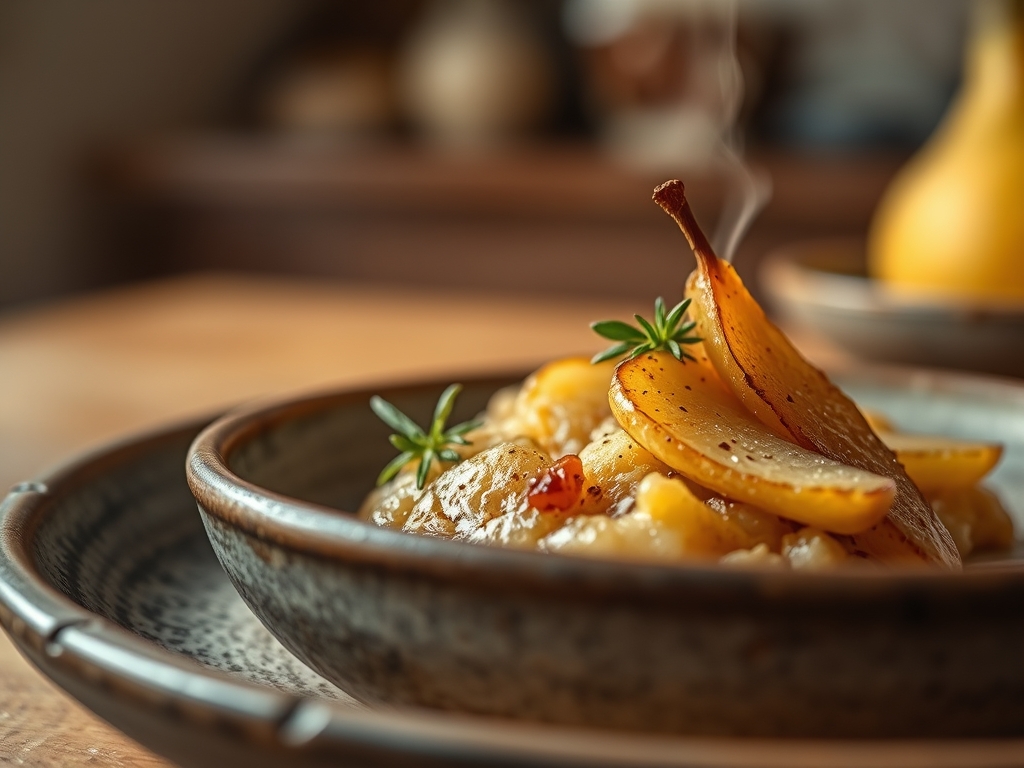
Look closely at the Masterclass photo above. Notice the "Halo Effect" where the outer 2mm of the pear is translucent while the core remains opaque. This is the visual signature of a perfect poach. If your pears appear entirely translucent, they are overcooked and the Crisp Pear Grit has been compromised. If they are patchy and white, the poaching liquid was not hot enough to penetrate the dense tissue. Uneven browning usually stems from a crowded pan; ensure at least two inches of clearance between each fruit to allow steam to escape. If the syrup looks dull rather than glossy, your acid balance is off. A final squeeze of lemon juice can "brighten" the visual luster by shifting the pH and allowing the sugars to refract light more effectively.
THE DEEP DIVE
Macro Nutrition Profile:
A single serving of this engineered fruit infrastructure contains approximately 210 calories. The breakdown is 1g Protein, 42g Carbohydrates (primarily from fructose and the wine reduction), and 5g Fat (from the butter sear). The high fiber content, located within the sclereid cells, provides a lower glycemic response than processed fruit desserts.
Dietary Swaps:
- Vegan: Replace the high-fat butter with a cold-pressed coconut oil or a high-quality vegan butter substitute with a low water content.
- Keto: This is a challenge due to the natural sugars in pome fruit, but you can swap the sugar for an erythritol-monk fruit blend and use a dry, low-carb wine.
- GF: Naturally gluten-free, but ensure your vanilla paste does not use grain alcohol as a base.
Meal Prep & Reheating Science:
To maintain the molecular structure, store the pears and the syrup separately. Reheating should be done in a 350F (175C) oven for 8 minutes. Avoid the microwave at all costs; the electromagnetic radiation vibrates water molecules so violently that it ruptures the cell walls, instantly destroying the Crisp Pear Grit and resulting in a weeping, flaccid texture.
THE KITCHEN TABLE
Why is my pear grit feeling like sand?
That is the lignified cell wall. If it feels overly abrasive, the pear was likely under-ripe or a variety like the Kieffer. Proper poaching softens the surrounding parenchyma tissue, making the grit feel like a sophisticated structural element rather than debris.
Can I use red wine instead?
Absolutely. A bold Cabernet will provide a deep ruby hue, but be warned: the tannins in red wine can react with the pear's proteins, occasionally creating a slightly astringent mouthfeel that requires more sugar to balance.
My syrup crystallized in the pan. Help!
You likely had "seed crystals" on the side of the pan. Add a tablespoon of water and a drop of lemon juice, then stir gently over low heat. The acid helps break down sucrose into invert sugars, which resist crystallization.
How do I get that perfect amber color?
It is all about the "dry-down." If you do not pat the pear dry before the sear, the Maillard reaction cannot begin until all surface water evaporates. By then, the interior is overcooked. Dry fruit equals fast color.