Imagine a cloud so structurally sound you could build a miniature skyscraper on it. That is the goal of professional Whipped Cream Aeration. We are not merely beating fat into a frenzy; we are engineering a multi-phase gas-liquid-solid suspension. When you plunge a whisk into heavy cream, you are initiating a violent mechanical intervention. You are shearing fat globules, exposing their hydrophobic interiors, and forcing them to cling to air bubbles for dear life. It is a high-stakes architectural project where the mortar is lipid-based and the bricks are atmospheric nitrogen and oxygen. If you fail, you get a weeping, grainy puddle of disappointment. If you succeed, you achieve a silken, viscous masterpiece that defies gravity and persists under the heat of a service pass. This is the infrastructure of luxury. We are looking for maximum volume, impeccable stability, and a mouthfeel that vanishes like a ghost while leaving a rich, buttery trail. This audit covers the physics of the foam, the chemistry of the fat, and the brutal reality of high-volume production.
THE DATA MATRIX
| Metric | Specification |
|---|---|
| Prep Time | 10 Minutes |
| Execution Time | 5 Minutes |
| Yield | 1 Liter (4.2 Cups) |
| Complexity (1-10) | 4 |
| Estimated Cost per Serving | $0.45 |
THE GATHERS
Ingredient Protocol:
- 500ml / 2 cups Heavy Whipping Cream (Minimum 36% Milkfat)
- 60g / 0.5 cup Powdered Sugar (Sifted)
- 5ml / 1 tsp Pure Vanilla Extract
- 1g / 0.25 tsp Xanthan Gum (Optional Stabilizer)
- 0.5g / Pinch Fine Sea Salt
Section A: Ingredient Quality Audit:
The most common failure in Whipped Cream Aeration is "Fat Fatigue." If your cream has been heat-shocked during transport, the fat globules may have already begun to coalesce, leading to a grainy texture before you even start. To fix this, ensure your cream is stored at exactly 4 degrees Celsius (39 degrees Fahrenheit) for at least 12 hours prior to use. If your cream lacks the necessary viscous quality, it likely has a low fat content. Professional kitchens should never use "Light" cream; the lack of lipid density makes it impossible to trap air effectively. If you find your foam collapsing too quickly, your sugar might be the culprit. Use powdered sugar rather than granulated, as the cornstarch in powdered sugar acts as a secondary stabilizer to wick away excess moisture.
THE MASTERCLASS
1. Thermal Calibration of Equipment
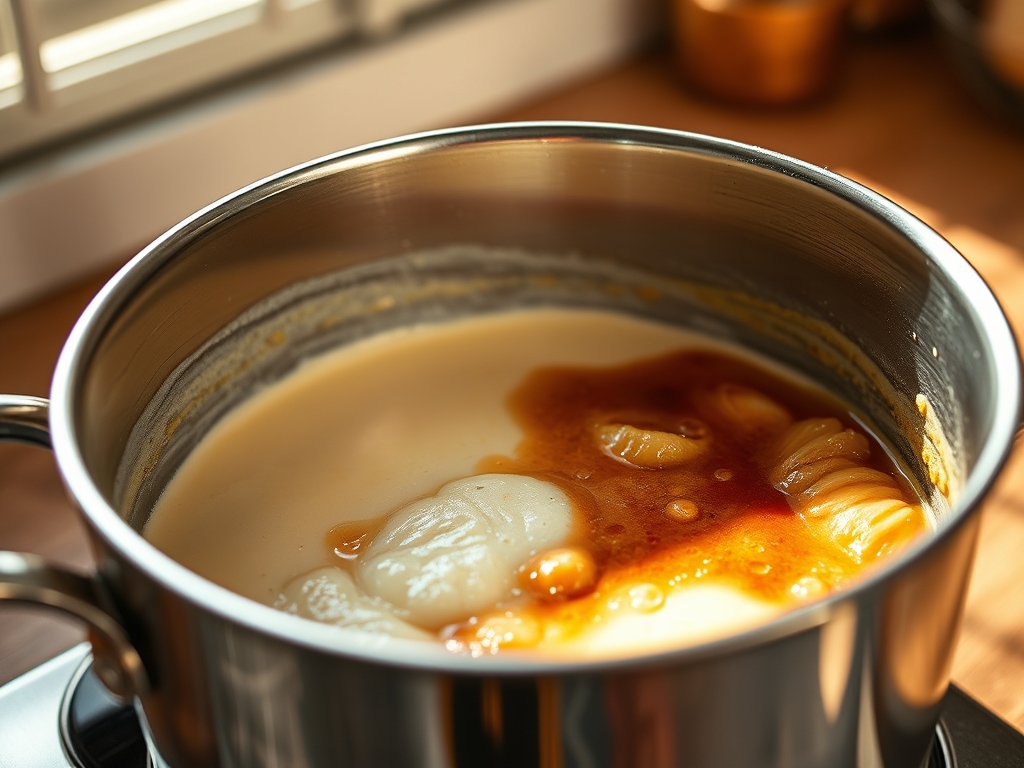
Place your stainless steel mixing bowl and whisk attachment in the freezer for twenty minutes. Cold equipment is non-negotiable because the fat globules must remain solid to form a protective shell around the air pockets. If the bowl is warm, the fat melts, the bubbles pop, and you end up with a liquid mess.
Pro Tip: Use a digital scale to measure your ingredients by weight rather than volume. Precision in the ratio of stabilizer to fat ensures that the foam remains light without becoming "rubbery."
2. Initial Gas Injection
Pour the chilled cream into the bowl and begin whisking on medium-low speed. This stage is about creating a uniform distribution of small bubbles rather than a few large ones. Slow and steady wins the stability race.
Pro Tip: Use a saucier or a deep bowl to prevent splashing. Starting at a lower RPM allows the protein structures to stretch gradually, creating a more resilient network for the gas phase.
3. The Sweetening Phase
Once the cream reaches the "ribbon stage" (where it leaves a faint trail), stop the mixer. Sift in your powdered sugar and salt. If using xanthan gum, mix it with the sugar first to prevent clumping.
Pro Tip: Use a bench scraper to ensure no dry pockets of sugar remain at the bottom of the bowl. Even distribution of solutes is critical for maintaining osmotic balance within the foam.
4. Achieving Peak Stability
Increase the speed to medium-high. Watch the texture closely. You are looking for "Stiff Peaks," where the cream stands straight up when the whisk is lifted. The surface should look matte, not shiny.
Pro Tip: As you approach the finish, finish the whisking by hand. This gives you tactile feedback on the viscous resistance of the cream, preventing the dreaded over-whip into butter.
Section B: Prep & Timing Fault-Lines:
The biggest human error is the "Set and Forget" mentality. High-speed mixers can turn perfect cream into over-whipped butter in less than fifteen seconds. If you over-whip, you can sometimes "rescue" the batch by folding in a few tablespoons of fresh, liquid cream with a spatula to infuse some moisture back into the broken emulsion. However, if the yellow fat solids have fully separated, the batch is a total loss for aeration purposes. Another timing fault is prepping the foam too far in advance. Even stabilized foams lose 10% of their volume every hour due to gravity.
THE VISUAL SPECTRUM
Section C: Thermal & Visual Troubleshooting:
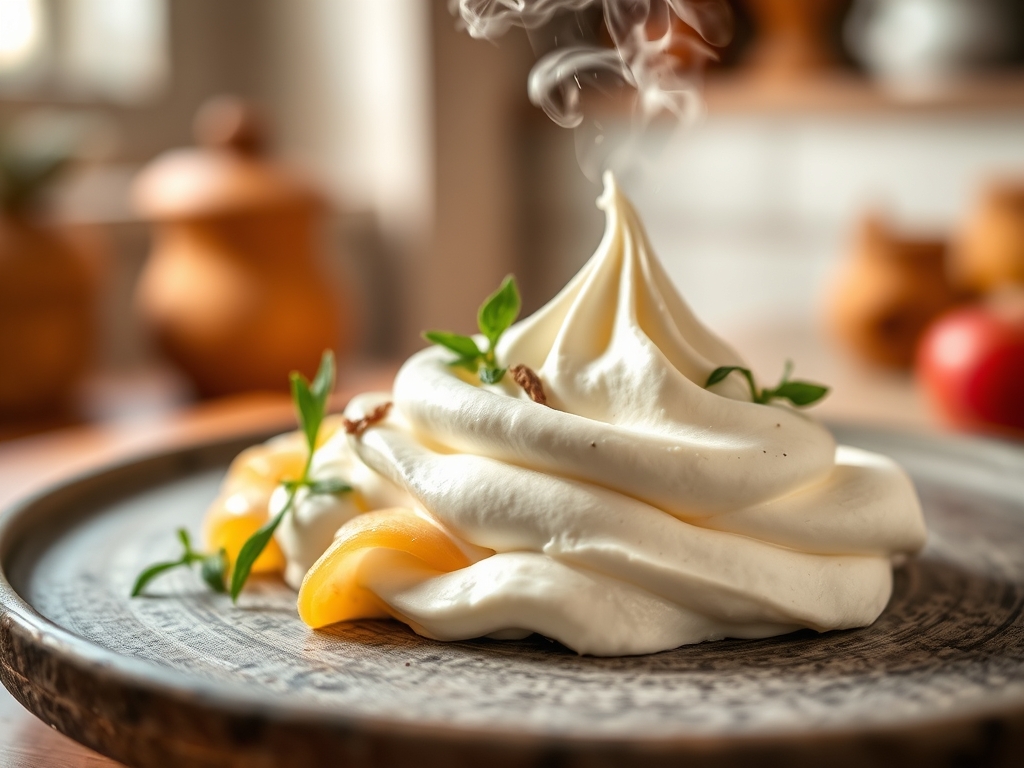
Look at the Masterclass photo above. Notice the sharp, defined edges of the dollop. This indicates high structural integrity. If your cream looks "soft" or "slumping," it has been under-whipped or the fat content is too low. If the surface appears "curdled" or yellowed, you have sheared the fat globules too aggressively, leading to partial churning. To fix dull colors, ensure your vanilla extract is clear or use a tiny pinch of titanium dioxide if a stark white finish is required for high-contrast plating. If the cream looks "pitted" with large holes, your initial whisking speed was too high; you must aerate with smaller, more consistent bubbles to achieve that velvet sheen.
THE DEEP DIVE
Macro Nutrition Profile
Per 30g serving: 100 Calories, 10g Fat, 2g Carbohydrates, 0g Protein. This is a high-density lipid delivery system. While it provides fat-soluble vitamins (A, D, E, K), it is primarily a structural and sensory component rather than a nutritional powerhouse.
Dietary Swaps
- Vegan: Replace heavy cream with chilled full-fat coconut cream or a high-performance pea-protein based commercial cream. Use cream of tartar as a stabilizer.
- Keto: Swap powdered sugar for powdered erythritol or monk fruit. The structural physics remain identical.
- GF: Naturally gluten-free, but ensure your powdered sugar uses cornstarch or tapioca starch as the anti-caking agent.
Meal Prep & Reheating Science
Whipped cream cannot be "reheated." Heat is the enemy of the gas-liquid interface. To store, place in a piping bag and keep in the coldest part of the refrigerator. For long-term stability, "stabilized" cream (using gelatin or xanthan) can hold its shape for up to 24 hours. If the structure begins to weep, you can briefly re-whip it to infuse new air, but the texture will never be as fine as the first aeration.
THE KITCHEN TABLE
Why does my cream turn to liquid after an hour?
This is syneresis. The water is escaping the fat-protein network. Use a stabilizer like xanthan gum or gelatin to trap the moisture and maintain the gas phase stability for longer durations.
Can I use a blender for aeration?
Blenders use high-shear blades that often heat the cream and break the fat globules too quickly. A whisk or a stand mixer is superior for creating the delicate, uniform air pockets required for luxury foams.
What is the "Butter Point"?
The butter point is the moment of catastrophic phase inversion. The air bubbles collapse, and the fat globules fuse together into a solid mass, squeezing out the buttermilk. Once you hit this, you cannot go back.
Does the sugar type really matter?
Yes. Granulated sugar is heavy and abrasive; it can pop air bubbles during the whipping process. Powdered sugar contains cornstarch, which absorbs excess moisture and provides a structural "scaffold" for the foam.