Listen closely because your sensory perception is about to be audited. That clean, percussive crack you hear when a professional chocolate bar yields to pressure is not a happy accident; it is the sound of a perfectly executed crystalline lattice. We call this the Chocolate Bar Snap. It is the definitive proof of structural integrity in the world of lipid engineering. When you fail to temper correctly, you do not just get "soft chocolate"; you get a destabilized mess of Beta-prime crystals that crumble like wet chalk. A true snap requires the alignment of Form V cocoa butter crystals, which pack together with the density of a diamond. This is about more than flavor; it is about the physics of mouthfeel. As the chocolate hits your tongue, the heat of your body should trigger a rapid phase change, melting the solid structure into a viscous, velvet liquid. If your bar bends instead of breaks, your infrastructure has failed. We are here to ensure that every shard you produce is a masterpiece of molecular alignment and acoustic perfection.
THE DATA MATRIX
| Metric | Specification |
|---|---|
| Prep Time | 15 Minutes |
| Execution Time | 45 Minutes |
| Yield | 500g of Tempered Chocolate |
| Complexity (1-10) | 8 |
| Estimated Cost per Serving | $1.25 |
THE GATHERS
Ingredient Protocol:
- 500g / 17.6 oz High-Quality Couverture Chocolate (at least 60% cocoa solids)
- 2g / 0.5 tsp Cocoa Butter Silk (optional, for seeding)
- 5g / 1 tsp Flaky Sea Salt (for finishing)
Section A: Ingredient Quality Audit:
The primary failure point in chocolate infrastructure is the use of "compound" chocolate. If your packaging lists vegetable oil or palm oil instead of 100% cocoa butter, abort the mission. These fats do not crystallize; they merely congeal, resulting in a dull finish and zero Chocolate Bar Snap. If your raw material has "bloomed" (showing white streaks), it is not ruined, but the moisture content must be zero. Even a single drop of water will cause the chocolate to seize, turning your viscous liquid into a gritty, unworkable paste. To fix seized chocolate, you must emulsify it with a small amount of neutral oil, though this will permanently compromise the snap. Start with pristine, dry ingredients or do not start at all.
THE MASTERCLASS
Step-by-Step Execution:
1. Thermal Deconstruction
Place two-thirds of your chocolate in a dry saucier or a heat-proof bowl over a simmering water bath. Ensure the bowl does not touch the water. Heat the mass until it reaches 48C (118F) for dark chocolate. This temperature ensures all existing crystal structures are completely melted, providing a blank slate for reconstruction.
Pro Tip: Use a high-accuracy digital scale to weigh your "seed" chocolate (the remaining one-third) before you begin. Precision in mass ratios is the only way to guarantee a consistent thermal decline.
2. The Seeding Phase
Remove the bowl from the heat and wipe the bottom to prevent water drips. Gradually add the remaining finely chopped chocolate (the seed). Stir constantly with a flexible spatula. The seed chocolate introduces stable Form V crystals to the melted mass, acting as a blueprint for the rest of the lipids to follow.
Pro Tip: Agitation is key. By stirring vigorously, you infuse the mixture with movement that prevents the formation of unstable crystal types.
3. Precision Cooling
Continue stirring until the temperature drops to 27C (81F). At this point, the chocolate will appear slightly more viscous. This is the "mush" state where the crystal nuclei are forming. Do not rush this; if the temperature drops too fast, you will end up with uncontrolled crystallization.
Pro Tip: Utilize a bench scraper to move the chocolate across a cool marble slab if you want to accelerate the process like a master chocolatier. This increases the surface area for heat exchange.
4. Reheating to Working Temp
Briefly place the bowl back over the water bath for 5 to 10 seconds. Bring the temperature up to exactly 31C to 32C (89F to 90F). This specific window melts away any unstable Form IV crystals while keeping the stable Form V crystals intact.
Pro Tip: Test your temper by dipping a knife into the chocolate. If it sets within 3 minutes at room temperature with a matte-gloss finish, your infrastructure is sound.
5. The Final Cast
Pour the tempered chocolate into your molds. Tap the molds firmly on the counter to aerate and release trapped bubbles. Allow to set in a cool, dry environment (18C / 65F) for at least two hours.
Pro Tip: A professional offset spatula is essential here to level the back of the bars, ensuring a uniform thickness that promotes an even Chocolate Bar Snap across the entire surface.
Section B: Prep & Timing Fault-Lines:
The most common human error is "thermal overshoot." If you accidentally heat the chocolate to 33C during the final stage, you have destroyed the seed crystals. You must restart the entire process from Step 1. Another fault-line is the "cold shock." Placing chocolate in the freezer to speed up setting will cause sugar bloom due to condensation. Patience is a technical requirement. If your kitchen is above 24C, your chocolate will never set correctly; climate control is part of your culinary infrastructure.
THE VISUAL SPECTRUM
Section C: Thermal & Visual Troubleshooting:
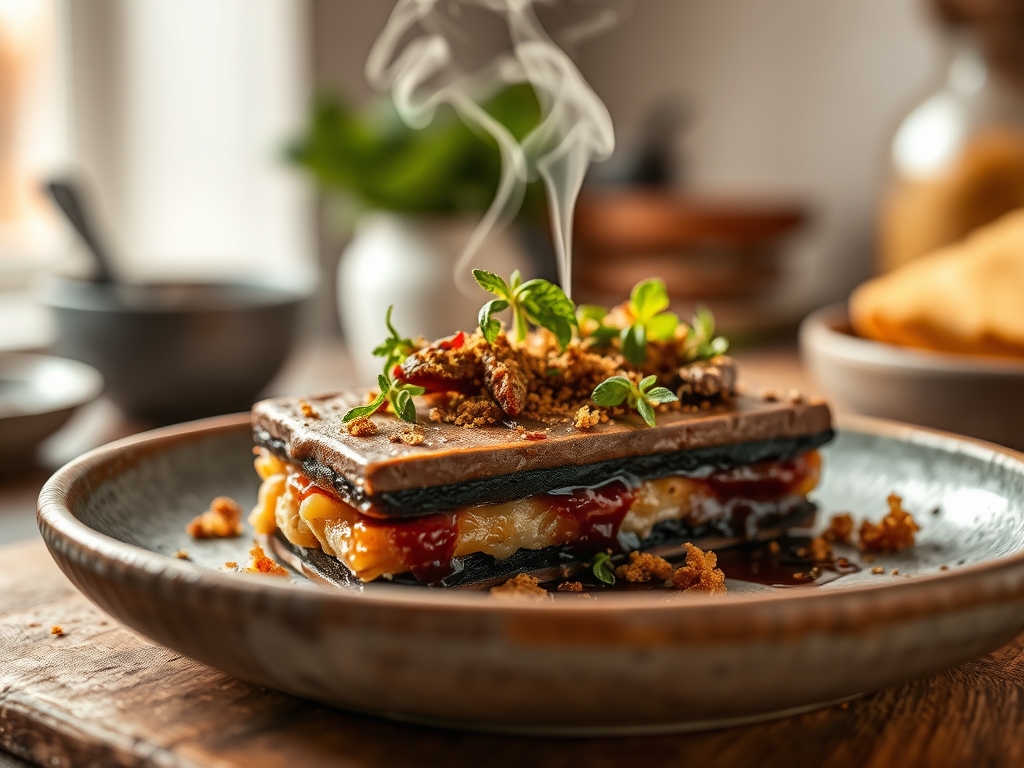
Referencing the Masterclass photo, observe the high-gloss finish and the sharp, clean edges of the broken shards. If your chocolate appears dull or has "fat bloom" (white swirls), your cooling phase was too slow. If the chocolate is difficult to remove from the mold, it has not contracted properly, which only happens with a successful temper. A perfect Chocolate Bar Snap should reveal a tight, pore-less interior grain. If you see large air pockets, you failed to degas the mold. The color should be a deep, uniform mahogany; any streaks indicate uneven lipid distribution during the stirring phase.
THE DEEP DIVE
- Macro Nutrition Profile: Pure dark chocolate is high in flavonoids and healthy fats (stearic and oleic acids). A 40g serving typically contains 230 calories, 14g fat, 20g carbohydrates, and 3g protein.
- Dietary Swaps (Vegan/Keto/GF): High-quality dark chocolate is naturally vegan and gluten-free. For Keto, utilize a 100% cacao mass and sweeten with erythritol, though note that sugar alcohols alter the crystallization temperature by approximately 2 degrees.
- Meal Prep & Reheating Science: Tempered chocolate is shelf-stable for 6 to 12 months if stored at 18C. Never reheat tempered chocolate in a microwave if you intend to maintain the snap; the localized "hot spots" will instantly de-align the lipid crystals.
THE KITCHEN TABLE
Why does my chocolate feel gritty?
Grittiness usually indicates that the chocolate seized due to moisture or was overheated. Once the proteins and sugars clump together, they cannot be smoothed out without adding a surfactant like lecithin or more fat.
Can I temper chocolate without a thermometer?
It is possible but risky. You can use the "lip test" to feel if the chocolate is cooler than body temperature, but for a guaranteed Chocolate Bar Snap, a digital infrared thermometer is non-negotiable.
What is the white powder on my old chocolate?
That is fat bloom. It occurs when chocolate is stored in fluctuating temperatures, causing the cocoa butter to migrate to the surface. It is safe to eat but indicates the temper is lost.
How do I get the shiniest finish possible?
Ensure your molds are polished with a microfiber cloth or cotton wool before pouring. Any microscopic residue or dust on the mold will be imprinted onto the chocolate surface, dulling the final aesthetic.