Imagine a scent so dense it possesses its own gravitational pull. We are not discussing the synthetic, alcohol-heavy whispers found in grocery store aisles; we are talking about the total structural saturation of a space. When you execute a proper Vanilla Bean Infusion, you are not merely cooking. You are performing a molecular heist, stripping the volatile aromatics from the fibrous husk of the Orchidaceae pod and suspending them within a lipid matrix. The air becomes viscous with sweetness. Your olfactory receptors are bombarded by over 250 distinct flavor compounds, ranging from smoky phenols to floral esters. This is the infrastructure of flavor. It is the difference between a dessert that merely tastes like sugar and one that resonates with a long-phase finish. We are building a foundation of taste that lingers on the palate long after the final bite. This process requires precision, heat control, and an absolute refusal to settle for imitation. Prepare your station; we are about to turn a simple liquid into a concentrated vessel of aromatic power.
THE DATA MATRIX
| Metric | Specification |
|---|---|
| Prep Time | 15 Minutes |
| Execution Time | 45 Minutes |
| Yield | 500ml / 2 Cups |
| Complexity (1-10) | 4 |
| Estimated Cost per Serving | $1.25 |
THE GATHERS
Ingredient Protocol:
- 500ml / 2 cups Heavy Cream (minimum 36% milk fat)
- 3 Whole Madagascar Bourbon Vanilla Beans (Grade A)
- 100g / 0.5 cup Granulated Sugar
- 2g / 0.25 tsp Flaked Sea Salt
- 50g / 3.5 tbsp Unsalted European-style Butter
Section A: Ingredient Quality Audit:
If your vanilla beans feel brittle or snap when bent, they have lost their essential oils. To salvage them, soak the pods in warm water for five minutes before splitting. If your cream lacks the necessary fat content, the vanillin particle saturation will fail because the flavor compounds require lipids to bind effectively. Always check the "sell-by" date; older cream develops a piquant acidity that clashes with the floral notes of the bean. If using salted butter by mistake, omit the additional sea salt to maintain the electrolyte balance of the infusion.
THE MASTERCLASS
Step-by-Step Execution:
1. Pod Dissection and Seed Extraction
Place your vanilla beans on a clean cutting board. Using a sharp paring knife, slice the pods lengthwise to expose the "caviar" inside. Use the back of the knife to scrape the seeds into a small bowl.
Pro Tip: Use a digital scale to ensure your bean weight is consistent. The science here involves maximizing surface area; by exposing the seeds, you allow the warm lipids to surround and infuse every microscopic particle of flavor.
2. The Lipid Warm-Up
In a heavy-bottomed saucier, combine the heavy cream and the empty vanilla husks. Heat over medium-low flame until the liquid reaches 80 degrees Celsius (176 degrees Fahrenheit). Do not allow it to reach a rolling boil.
Pro Tip: A saucier is superior to a standard saucepan because its rounded bottom prevents "hot spots" where the milk solids might scorch. Maintaining a sub-boil temperature prevents the proteins from denaturing too aggressively, which would ruin the mouthfeel.
3. Molecular Integration
Whisk in the scraped vanilla seeds, sugar, and salt. Use a constant, rhythmic motion to aerate the mixture slightly, ensuring the seeds do not clump at the bottom. Maintain this temperature for 20 minutes.
Pro Tip: Constant agitation with a balloon whisk ensures the sugar undergoes a gentle dissolution without caramelizing prematurely. This keeps the color ivory and the flavor profile focused purely on the vanilla.
4. The Butter Emulsification
Remove the pan from the heat. Whisk in the cold, cubed butter one piece at a time until the mixture is glossy and thick. This is the final stage of creating a stable emulsion.
Pro Tip: Using a bench scraper to cube your butter ensures even pieces that melt at the same rate. The cold butter drops the temperature of the cream rapidly, "locking in" the volatile aromatics and creating a viscous texture that coats the tongue.
5. The Final Filtration
Pour the mixture through a fine-mesh sieve into a glass container. This removes the spent husks and any stray coagulated proteins, leaving only the concentrated infusion and the tiny black seeds.
Pro Tip: Use a silicone spatula to press the husks against the sieve. This forces out the last concentrated droplets of oil, which contain the highest density of flavor.
Section B: Prep & Timing Fault-Lines:
The most common failure is the "scorch event." If you see brown flecks that aren't vanilla seeds, your heat was too high, and the milk sugars have burned. If the infusion smells faint, you likely didn't steep it long enough; the "long phase" requires at least 20 minutes of thermal contact. If the mixture separates, your butter was added too quickly or the cream was too hot, breaking the emulsion.
THE VISUAL SPECTRUM
Section C: Thermal & Visual Troubleshooting:
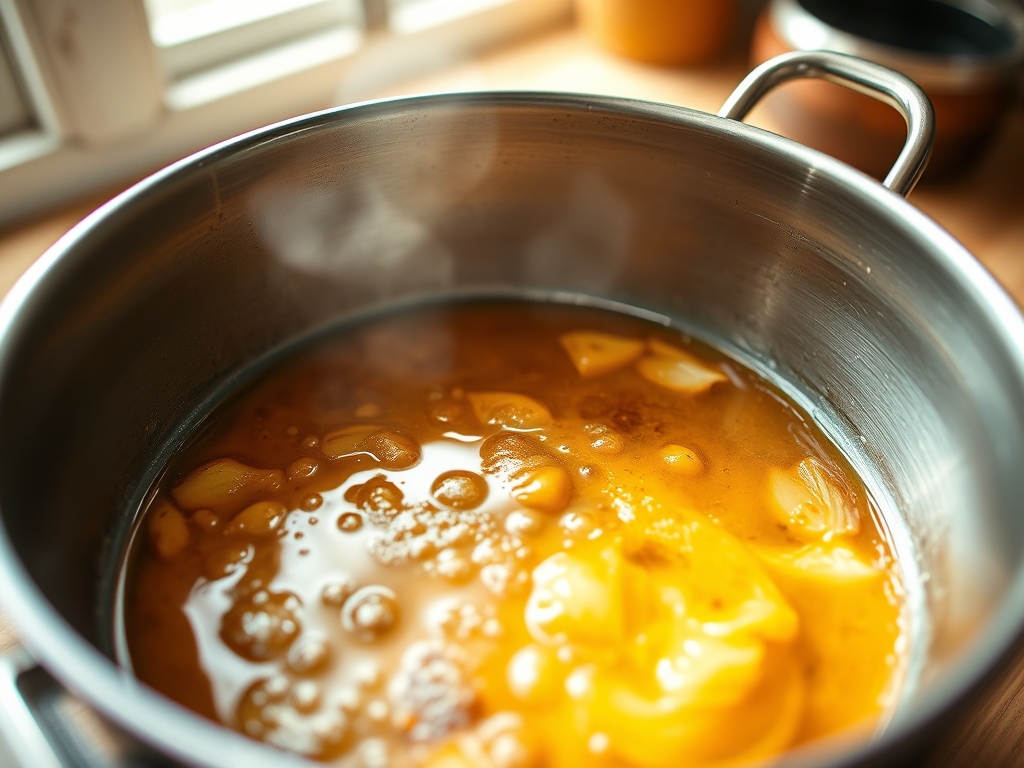
Look at the Masterclass photo above. Notice the deep, creamy ivory hue and the uniform distribution of black specks. If your infusion looks grey, you may have used low-quality pods with excess moisture. If the surface shows "oil slicks," the butter has broken out of the emulsion. To fix a broken sauce, whisk in a teaspoon of cold cream vigorously. The final product should have a satin sheen, reflecting light without looking greasy. The seeds should remain suspended in the liquid rather than sinking immediately to the bottom, indicating proper viscosity.
THE DEEP DIVE
Macro Nutrition Profile:
This infusion is a high-density lipid source. Per 30ml serving, expect approximately 120 calories, 11g of fat, 6g of carbohydrates, and 1g of protein. It is a flavor concentrate designed for moderation.
Dietary Swaps:
For a Vegan version, substitute the heavy cream with full-fat coconut cream and use a high-quality vegan butter block. For Keto, replace the granulated sugar with an erythritol-monk fruit blend. The recipe is naturally Gluten-Free, provided your vanilla source is pure.
Meal Prep & Reheating Science:
Store this infusion in an airtight glass jar for up to seven days. When reheating, use a double boiler (bain-marie) to gently warm the lipids. Microwaving will shatter the molecular structure, causing the fats to separate and the vanillin to lose its potency. Gentle heat preserves the viscous nature of the emulsion.
THE KITCHEN TABLE
Why does my infusion taste bitter?
You likely scraped too much of the "pith" from the inside of the pod or scorched the cream. Bitterness is a sign of thermal degradation of the milk solids. Keep the heat low and slow for success.
Can I reuse the vanilla pods?
Absolutely. Rinse the spent husks, dry them thoroughly, and bury them in a jar of sugar. Over two weeks, the remaining vanillin will render out, creating high-quality vanilla sugar for your coffee or baking needs.
Why are my vanilla seeds sinking?
If the seeds sink, your liquid is too thin. This happens if the cream wasn't reduced slightly or if the butter emulsification was skipped. A proper viscous texture is required to keep the particles in suspension.
Is there a difference between bean origins?
Yes. Madagascar beans are creamy and classic. Tahitian beans offer floral, cherry-like notes. Mexican beans have a spicy, woody profile. Choose your origin based on the specific flavor infrastructure you wish to build.