Listen to that sound. It is not just a crunch; it is a structural collapse of micro-thin wheat membranes. When you work with phyllo, you are not just baking; you are managing a high-stakes dehydration event. The objective is Filo Layer Setting, a process where moisture is violently evicted from the dough, leaving behind a rigid, golden lattice of lipids and starch. If your pastry feels like wet cardboard, you have failed the audit. If it shatters into a thousand shards of buttery glass upon impact, you have achieved culinary structural integrity. We are moving beyond the amateur realm of "brushing on some butter." This is about heat transfer, moisture migration, and the exact moment the proteins denature to lock those layers into a permanent, crispy state. We are hunting for that perfect golden hue that signals a successful Maillard reaction. This is technical baking where every millimeter of fat distribution determines whether you serve a masterpiece or a soggy disappointment. Let us begin the audit of your infrastructure.
THE DATA MATRIX
| Metric | Specification |
|---|---|
| Prep Time | 25 minutes |
| Execution Time | 45 minutes |
| Yield | 12 Large Pastry Shells |
| Complexity (1-10) | 7 |
| Estimated Cost per Serving | $1.25 |
THE GATHERS
Ingredient Protocol:
- 454g / 1 lb Phyllo Dough (Thawed 24 hours in refrigeration).
- 225g / 1 cup Unsalted Butter (High fat content, minimum 82%).
- 50g / 4 tbsp Clarified Butter or Ghee (For higher smoke point).
- 15g / 1 tbsp Granulated Sugar (Optional, for structural reinforcement).
- 5g / 1 tsp Fine Sea Salt.
Section A: Ingredient Quality Audit:
If your phyllo dough arrives shattered or brittle, the moisture content has already been compromised by freezer burn. You cannot fix "dust." However, if the dough is overly tacky, it has likely been thawed too quickly at room temperature, causing condensation. To fix this, place the stack between two dry lint-free towels to aerate and wick away excess surface moisture. If your butter has a high water content (common in budget brands), it will steam the dough rather than fry it. The fix is to render the butter in a saucier until the milk solids separate, allowing you to use only the pure fat for a superior Filo Layer Setting.
THE MASTERCLASS
1. The Lipid Emulsification Prep
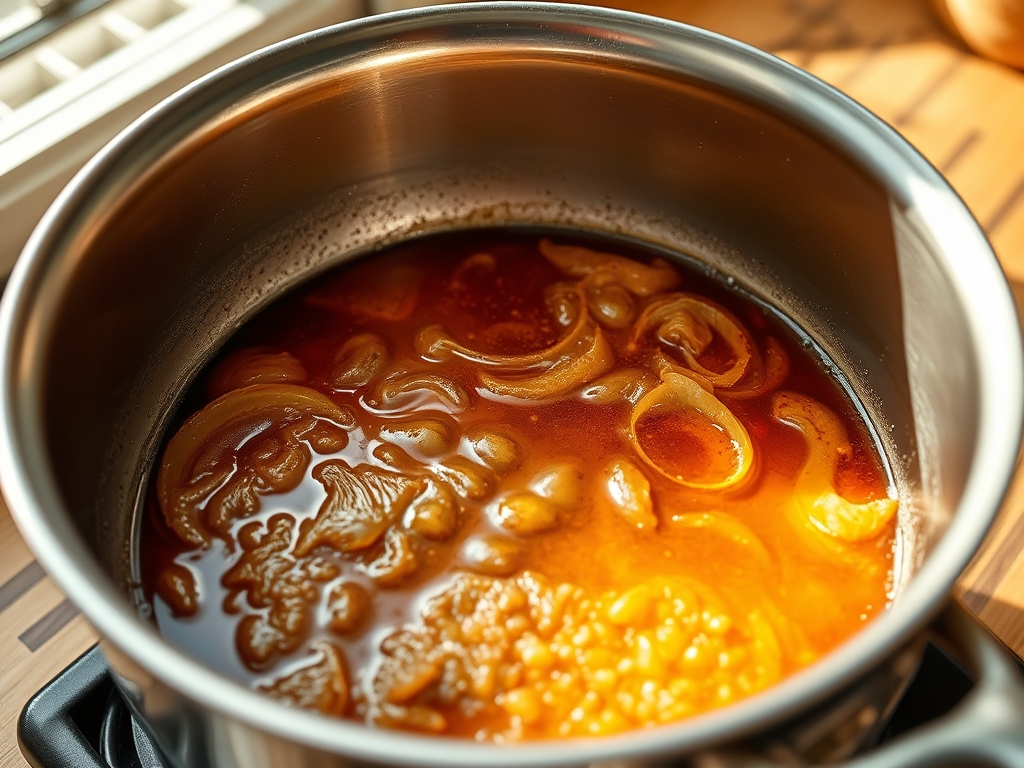
Begin by melting your high-fat butter in a heavy-bottomed saucier. Do not just melt it; you want to reach a state where the water has evaporated. Use a digital scale to ensure you have exactly 225g of fat. If you want a deeper flavor, allow the butter to slightly brown, which will infuse the pastry with nutty notes.
Pro Tip: The science here is about thermal conductivity. Pure fat transfers heat faster than water-heavy butter, ensuring the dough fries instantly upon hitting the oven heat rather than steaming.
2. The Layering Architecture
Lay one sheet of phyllo on a clean, dry surface. Use a wide pastry brush to apply a thin, even coat of fat. Do not saturate. You are creating a "glue" that will eventually become the structural ribs of the pastry. Repeat this for six to eight layers. Use a bench scraper to keep your edges flush and professional.
Pro Tip: This is the foundation of Filo Layer Setting. Each layer of fat acts as a barrier, preventing the sheets from fusing into a single thick block. You are creating a multi-layered heat shield.
3. Structural Compression
Once your stack is built, use a sharp chef's knife or a pizza wheel to cut the dough into your desired dimensions. Place the dough into your molds or onto a baking sheet. To prevent the pastry from curling or blowing away in a convection oven, place a second baking sheet or a silicone mat on top to provide light, even pressure.
Pro Tip: Compression ensures that the steam escaping from the dough is forced outward rather than upward, which prevents the center from bubbling and maintains a flat, professional surface.
4. The Dehydration Phase
Slide the tray into a preheated 175C / 350F oven. This is where the moisture is expelled. You are looking for the transition from pale white to a deep, resonant gold. At the 15-minute mark, rotate the tray 180 degrees to account for any hot spots in your oven.
Pro Tip: Using a digital thermometer to check the oven's ambient temperature is vital. Even a 10-degree variance can cause the outer edges to burn before the inner layers have achieved full dehydration.
Section B: Prep & Timing Fault-Lines:
The most common human error is "The Thaw Panic." Attempting to work with frozen phyllo results in micro-fractures that ruin the aesthetic. Always provide a full 24-hour lead time in the fridge. Another fault-line is the "Open Air Exposure." Phyllo dries out in seconds. If you aren't actively brushing a sheet, the entire stack must be covered with a damp (not soaking) cloth to maintain its viscous elasticity.
THE VISUAL SPECTRUM
Section C: Thermal & Visual Troubleshooting:
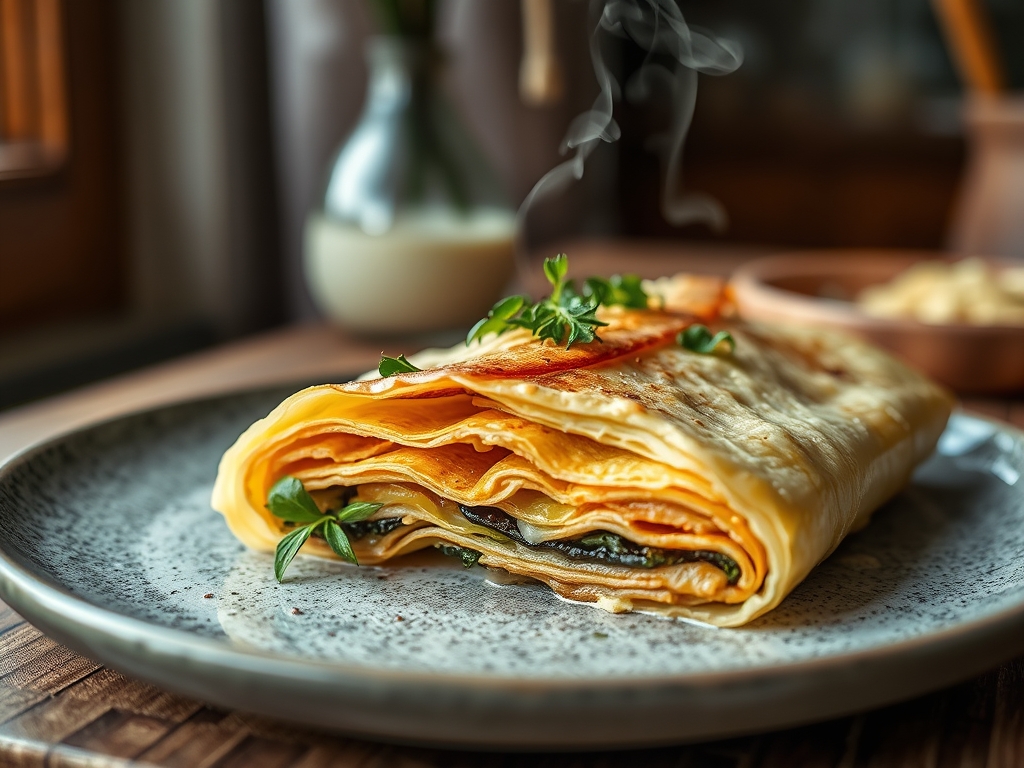
Look closely at the Masterclass photo above. Notice the "honeycomb" edge profile. If your edges are dark brown but the center is white, your oven temperature is too high; the heat is attacking the perimeter before it can penetrate the core. If the pastry looks dull and matte rather than shiny and crisp, you were too stingy with the fat. The fat is what allows the Maillard reaction to bloom across the surface. If you see large air pockets between layers, you failed to compress the stack during the initial bake phase. The solution for uneven browning is to deglaze your expectations and realize that a lower, slower bake often yields a more uniform, professional result.
THE DEEP DIVE
- Macro Nutrition Profile: High in carbohydrates and lipids. A standard serving (2 sheets) contains approximately 180 calories, 12g fat, and 15g carbohydrates. It is a "vessel" food, meaning the nutrition is largely dictated by the filling.
- Dietary Swaps: For a Vegan Audit, replace butter with a high-quality neutral oil or a vegan butter alternative with low water content. For Gluten-Free requirements, traditional phyllo is impossible; you must source specialized rice-flour based alternatives which require more delicate handling.
- Meal Prep & Reheating Science: To maintain molecular structure, never microwave blind-baked phyllo. The waves agitate water molecules, turning the crisp lattice into a rubbery mess. Reheat in a 300F oven for 5 minutes to re-crisp the fats and re-evaporate any ambient moisture absorbed from the air.
THE KITCHEN TABLE
Why is my phyllo always soggy at the bottom?
This is usually a failure of the Filo Layer Setting. If you add a wet filling to a warm shell, moisture migrates instantly. Always cool your shells completely on a wire rack to ensure air circulates underneath.
Can I use olive oil instead of butter?
Yes, but the flavor profile shifts significantly. Olive oil provides a more piquant finish and a crunch that is harder and less "melt-in-the-mouth" than butter. It is excellent for savory Mediterranean applications.
How do I stop the sheets from tearing?
Keep your hands cool and dry. Use a gentle "rolling" motion when peeling sheets from the stack rather than pulling from a single corner. If it tears, use a bit of fat to "suture" it back together.
How long do blind-baked shells last?
In an airtight container with a desiccant pack, they stay crisp for 48 hours. However, for peak structural integrity, they should be used within 12 hours of the dehydration audit.
Does the brand of phyllo matter?
Absolutely. High-end brands offer thinner sheets (usually labeled "Extra Fine"), which allow for more layers and a more delicate shatter. Cheaper brands are thicker and can feel "leathery" if not baked perfectly.