Stop thinking of fat as a mere byproduct and start treating it as the structural foundation of culinary architecture. We are not just cooking; we are conducting a high-stakes audit of lipid saturation to achieve the ultimate Marrow Bone Mouthfeel. This is the holy grail of texture. It is that specific, viscous coating that clings to the palate; a luxurious, silken weight that transforms a simple reduction into a velvet masterpiece. When you roast a split femur at high heat, you are not just melting solids. You are liberating a complex matrix of collagen and monounsaturated fats. The result is a piquant, primal richness that defies the capabilities of standard butter or oil. Achieving this level of sensory input requires more than a recipe; it requires a deep understanding of thermal breakdown and the precise moment of emulsification. If your sauce lacks gravity or your palate feels dry after a bite, your lipid audit has failed. We are here to ensure that every gram of rendered bovine fat serves a structural purpose, delivering a coating that is as persistent as it is decadent.
THE DATA MATRIX
| Metric | Specification |
|---|---|
| Prep Time | 45 Minutes |
| Execution Time | 3 Hours |
| Yield | 4 Servings |
| Complexity (1-10) | 8 |
| Estimated Cost per Serving | $12.50 |
THE GATHERS
Ingredient Protocol:
- 1.8 kg / 4 lbs Center-Cut Beef Marrow Bones (Canoe Cut)
- 500 ml / 2 cups Veal Stock (Double-Reduced)
- 120 ml / 0.5 cup Dry Red Wine (Bordeaux or Cabernet)
- 30 g / 2 tbsp Shallots (Finely Minced)
- 15 ml / 1 tbsp Cold-Pressed Olive Oil
- 5 g / 1 tsp Flaky Sea Salt
- 2 g / 0.5 tsp Cracked Black Peppercorns
- 10 g / 1 bunch Fresh Italian Parsley (Chiffonade)
- 15 ml / 1 tbsp Lemon Juice (Freshly Squeezed)
Section A: Ingredient Quality Audit:
If your marrow bones appear grey or emit a faint metallic odor, they have oxidized. To fix this, soak the bones in a 5% saline solution for 12 hours in the refrigerator to leach out excess blood and brighten the marrow. If your veal stock lacks the necessary gelatinous wobble at room temperature, it will fail to support the Marrow Bone Mouthfeel. You must fortify it by simmering it with an additional 5g of unflavored gelatin or reducing it by another 30% to concentrate the proteins. Sub-par shallots that are sprouting will introduce a bitter, sulfurous note; remove the green germ from the center before mincing to maintain a clean, piquant profile.
THE MASTERCLASS
Step-by-Step Execution:
1. Thermal Pre-Conditioning
Preheat your convection oven to 230C / 450F. Place the marrow bones on a heavy-gauge rimmed baking sheet, marrow side up. Season aggressively with sea salt. The high heat is essential to initiate the Maillard reaction on the surface of the bone while simultaneously liquefying the internal lipids.
Pro Tip: Use a digital infrared thermometer to ensure the surface of the sheet pan reaches temperature before the bones are added. This prevents the marrow from leaking out of the bottom before the top has a chance to crust.
2. The Extraction Phase
Roast the bones for 15 to 20 minutes. You are looking for a bubbling, golden-brown surface. The marrow should be soft to the touch but not entirely liquefied. Use a small offset spatula to test the resistance.
Pro Tip: In professional kitchens, we use a small tester needle to check the internal core. If the needle comes out hot to the touch, the collagen has successfully transitioned into a gelatinous state, contributing to that signature Marrow Bone Mouthfeel.
3. Aromatics and Deglazing
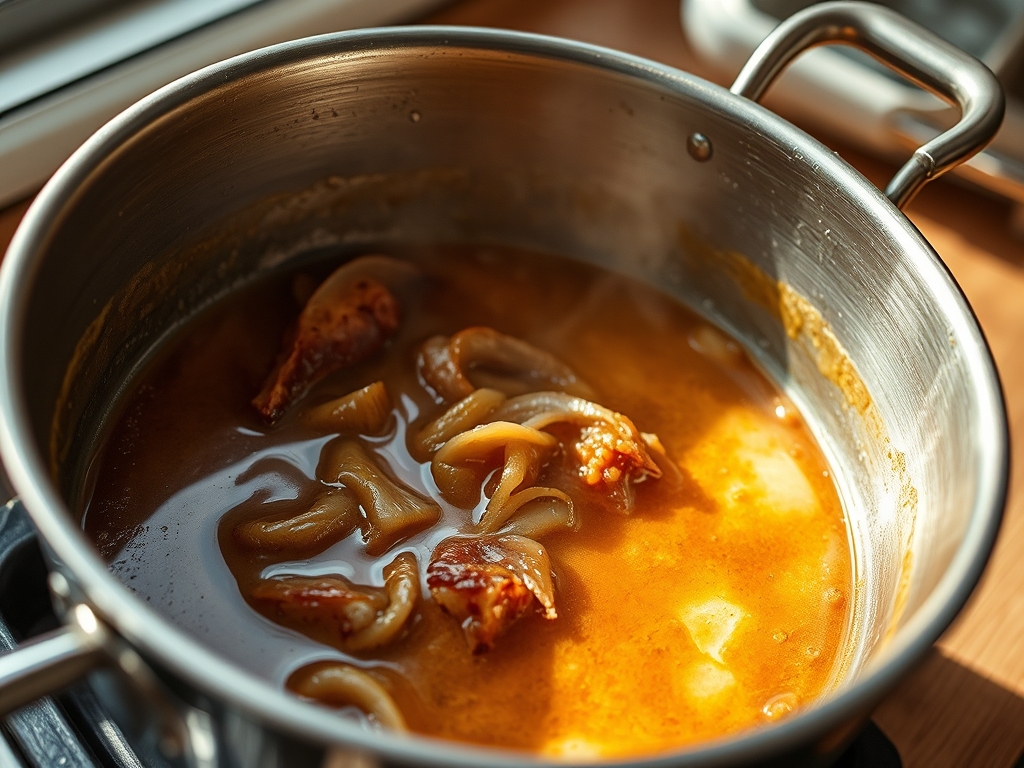
While the bones roast, heat your stainless steel saucier over medium heat. Add the olive oil and shallots. Sweat the shallots until translucent but not browned. Pour in the red wine to deglaze the pan, using a wooden spoon to scrape up any fond.
Pro Tip: The shape of a saucier, with its rounded bottom, allows for more efficient whisking and prevents the shallots from scorching in the corners. This ensures a consistent infusion of flavor.
4. Molecular Integration
Add the reduced veal stock to the saucier. Bring to a simmer and reduce by half until the liquid coats the back of a spoon. Once the bones are finished, carefully spoon out 30ml of the hot, rendered marrow and whisk it directly into the sauce.
Pro Tip: This is a technique known as "mounting" with fat. By whisking the rendered marrow into the reduction, you create a stable emulsion that amplifies the viscosity and creates a lingering palate coating.
5. The Acidic Counter-Balance
Remove the sauce from the heat. Stir in the lemon juice and fresh parsley. This acidity is crucial; it cuts through the intense lipid saturation, preventing the dish from feeling cloying while highlighting the richness of the marrow.
Pro Tip: Use a digital scale to measure your lemon juice. Accuracy in acidity is the difference between a balanced masterpiece and a muddy, heavy failure.
Section B: Prep & Timing Fault-Lines:
The most common failure in this protocol is the "Marrow Melt-Out." This occurs when the oven temperature is too low, causing the fat to render and leak away before the proteins can set. If you see a pool of clear yellow oil and an empty bone, your temperature was insufficient. Another fault-line is the "Broken Emulsion" in the sauce. If the marrow is whisked into a boiling sauce, the heat will break the protein bonds, resulting in a greasy, separated mess. Always whisk fat into a simmering or off-heat liquid to maintain structural integrity.
THE VISUAL SPECTRUM
Section C: Thermal & Visual Troubleshooting:
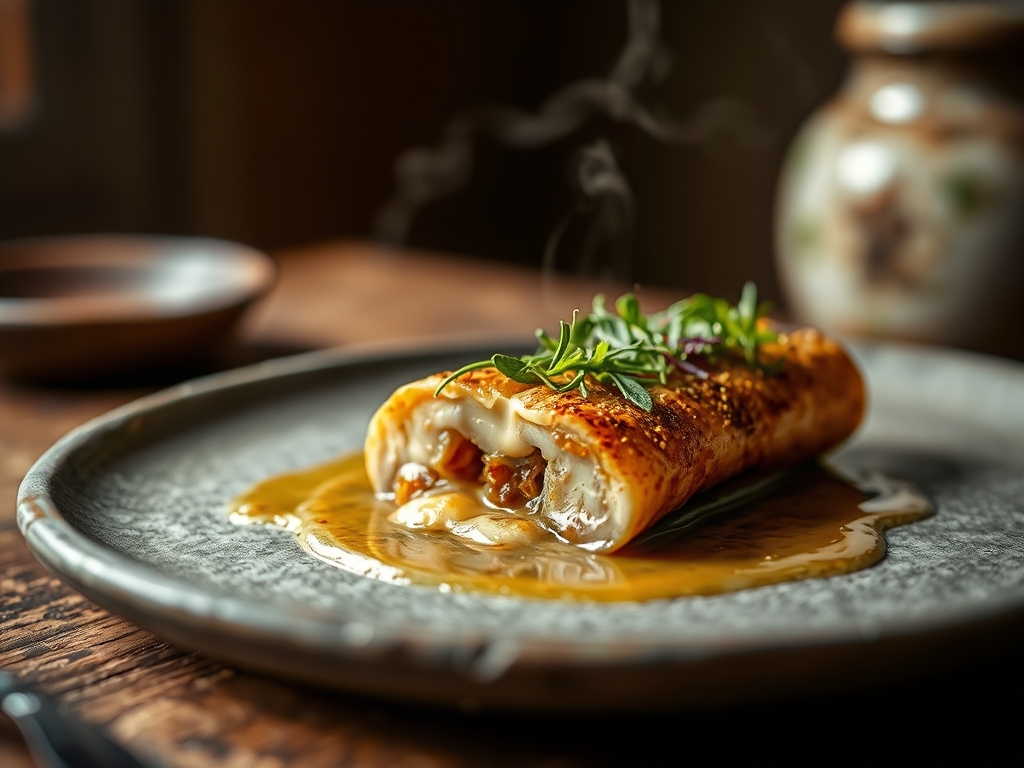
Referencing the Masterclass photo, the marrow should exhibit a vibrant, toasted amber hue. If your marrow looks white or translucent, it is undercooked and will have a "waxy" rather than "silken" texture. If the sauce appears dull or matte, it lacks the necessary lipid concentration; whisk in another teaspoon of marrow to restore the gloss. Uneven browning on the bones suggests poor airflow in the oven. Rotate the tray halfway through the roasting cycle. If the parsley appears brown or wilted, it was added while the sauce was too hot. Ensure the sauce is below 80C / 176F before adding fresh herbs to preserve the vibrant green chlorophyll.
THE DEEP DIVE
Macro Nutrition Profile
A single serving of roasted marrow is calorically dense, providing approximately 450 calories, 45g of fat, and 2g of protein. It is an exceptional source of adiponectin, a hormone associated with insulin sensitivity. The high concentration of alkylglycerols supports immune function, making this a nutrient-dense "super-fat."
Dietary Swaps
- Vegan: This protocol is fundamentally based on bovine lipids. For a vegan alternative, roast thick rounds of King Oyster mushrooms in a mixture of miso paste and refined coconut oil to mimic the umami and viscosity.
- Keto: This dish is naturally keto-compliant. Serve with celery root puree instead of bread.
- Gluten-Free: Ensure your veal stock was not thickened with a roux. The reduction method used here is naturally gluten-free.
Meal Prep & Reheating Science
Marrow does not reheat well in a microwave, as the radiation causes the lipid structure to collapse into a puddle of oil. To reheat, place the bones back in a 200C / 400F oven for 5 minutes. For the sauce, reheat gently in a small pot over low heat, adding a splash of water and whisking constantly to re-emulsify the fats.
THE KITCHEN TABLE
How do I know if the marrow is fully rendered?
The marrow should have the consistency of soft room-temperature butter. If you insert a toothpick and feel resistance, it needs more time. It should be easily scoopable with a small spoon while retaining a distinct, jiggly shape.
Can I use frozen marrow bones?
Yes, but they must be fully thawed in the refrigerator for 24 hours. Roasting frozen bones leads to an uneven cook where the exterior burns before the center reaches the melting point required for a proper Marrow Bone Mouthfeel.
Why is my sauce so salty?
As you reduce the veal stock, the salt concentration increases. Always use a low-sodium or unsalted stock for reductions. Taste the sauce only at the final stage before adding additional seasoning to avoid an over-salted disaster.
What is the best way to serve this?
Serve immediately on a warmed plate. The Marrow Bone Mouthfeel is highly temperature-dependent; as the fat cools, it begins to solidify, losing its silken quality and becoming unpleasantly heavy on the tongue.
Can I save the leftover rendered fat?
Absolutely. Filter the clear yellow fat through a fine-mesh sieve and store it in a glass jar in the fridge. Use it as a high-smoke-point cooking fat for searing steaks or roasting potatoes to add incredible depth.