Forget the watery, translucent liquids masquerading as soup bases in your local supermarket. We are here to discuss structural integrity and the architectural marvel of a true Gelatinous Bone Broth. If your stock does not wobble like a panna cotta when chilled; you have failed the audit. We are hunting for a specific molecular outcome: the complete conversion of triple-helix collagen into a suspended gelatin matrix. This is not just cooking; it is a high-stakes extraction process where marrow, connective tissue, and cartilage are surrendered to the heat. When executed correctly, the resulting liquid is so viscous it coats the back of a spoon with a shimmering, velvet sheen. It should feel like a liquid silk blanket on the palate, rich with the depth of roasted marrow and the piquant bite of a well-timed mirepoix. We are looking for a deep, amber clarity that defies the muddy expectations of amateur attempts. Prepare your station; we are about to turn humble skeletal remains into liquid gold.
THE DATA MATRIX
| Metric | Specification |
|---|---|
| Prep Time | 45 Minutes |
| Execution Time | 12 to 24 Hours |
| Yield | 4 Liters / 1 Gallon |
| Complexity (1-10) | 4 |
| Estimated Cost per Serving | $0.85 USD |
THE GATHERS
Ingredient Protocol:
- 2.5 kg / 5.5 lbs Beef Marrow and Knuckle Bones
- 1 kg / 2.2 lbs Meaty Beef Shank or Short Ribs
- 500g / 4 cups Yellow Onions (halved, skin on)
- 250g / 2 cups Carrots (large chunks)
- 250g / 2 cups Celery Stalks (large chunks)
- 60ml / 4 tbsp Apple Cider Vinegar
- 30g / 2 tbsp Black Peppercorns
- 5 sprigs Fresh Thyme
- 3 Bay Leaves
- 8 Liters / 2.1 Gallons Filtered Water
Section A: Ingredient Quality Audit:
If your bones look bleached or lack visible connective tissue; your yield will be structurally compromised. Sub-par raw materials often result from "soup bones" that have been stripped too clean. The fix is to source knuckle and patella bones specifically; these are the epicenters of collagen. If your vegetables are soft or sprouting, they will release bitter alkaloids during the long simmer. Always use firm, high-density aromatics. If the water source is heavily chlorinated, it will inhibit the delicate extraction of minerals. Use a carbon-filtration system or bottled spring water to ensure the flavor profile remains clean and focused on the beef essence.
THE MASTERCLASS
1. The Maillard Initiation
Preheat your oven to 230C / 450F. Arrange the bones on a heavy-duty rimmed baking sheet. Roast until they are a deep, mahogany brown. Do not settle for tan; we want a full chemical transformation of the surface proteins. Use a bench scraper to flip them halfway through to ensure even heat distribution.
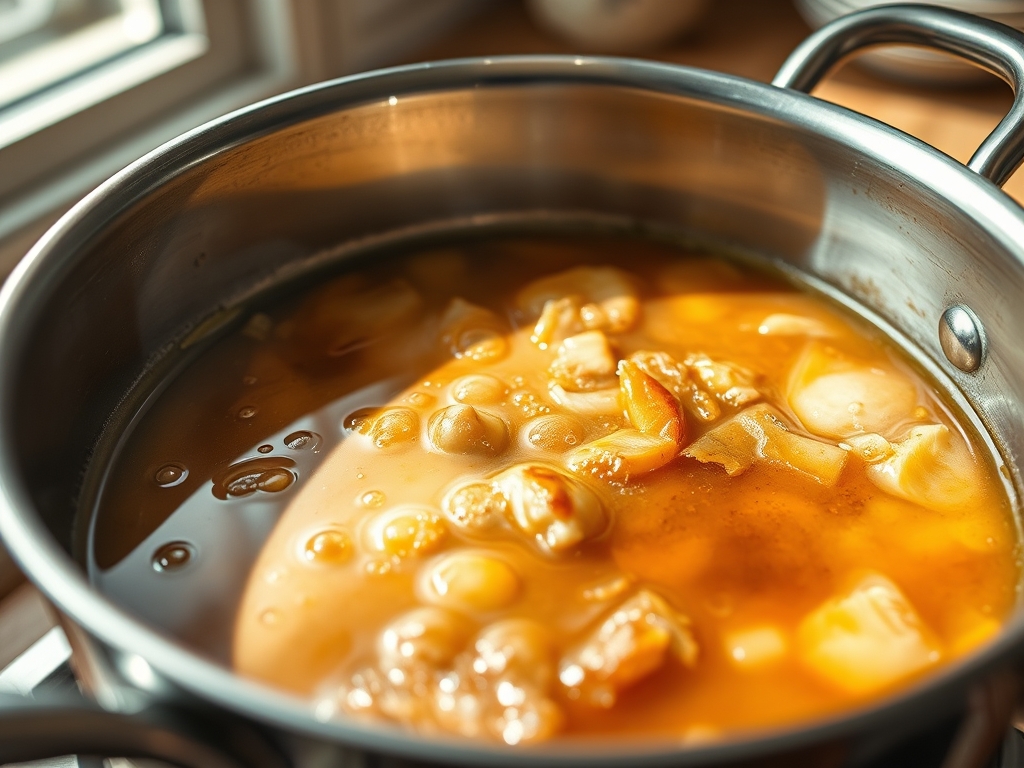
Pro Tip: This stage creates melanoidins through the Maillard reaction. These compounds provide the savory "umami" depth and the dark amber hue seen in the reference photo. Without this, your broth will be pale and nutritionally thin.
2. The Acidic Soak
Transfer the roasted bones into a large stainless steel saucier or stockpot. Add the filtered water and the apple cider vinegar. Let this sit for 30 minutes before applying heat. Use a digital scale to ensure your water-to-bone ratio is precise; too much water dilutes the gelatin concentration.
Pro Tip: The acetic acid in the vinegar acts as a solvent. It breaks down the calcium phosphate in the bone matrix, allowing the collagen to leach into the water more efficiently during the simmer.
3. The Controlled Extraction
Bring the pot to a very slow simmer. Do not allow it to reach a rolling boil. A "smile" on the surface of the water; where only a few bubbles break every few seconds; is the goal. Use a fine-mesh skimmer to remove the gray foam (impurities) that rises to the top in the first hour.
Pro Tip: High heat emulsifies fats into the liquid, creating a cloudy, greasy mess. Maintaining a low temperature ensures the fats stay separate so they can be easily skimmed later, preserving the clarity of the Gelatinous Bone Broth.
4. The Aromatic Infusion
Add the onions, carrots, celery, and herbs only in the final 4 to 6 hours of the cook. Adding them too early causes the cellulose to disintegrate, which clouds the broth and introduces "overcooked" vegetable notes that mask the beef.
Pro Tip: Onions skins are a secret weapon. They contain tannins that contribute to the deep, lustrous color of the final product. Always leave the skins on for the audit.
5. The Molecular Filtration
Once the time has elapsed, strain the broth through a chinois or a fine-mesh sieve lined with cheesecloth. Do not press down on the solids; let gravity do the work to maintain clarity. Chill the broth immediately in an ice bath to rapidly drop the temperature through the danger zone.
Pro Tip: Rapid cooling prevents the growth of thermophilic bacteria and helps the gelatin set into a firm, bouncy structure. Once chilled, the fat will solidify on top, making it easy to remove with a bench scraper.
Section B: Prep & Timing Fault-Lines:
The most common human error is impatience. If you pull the broth at 6 hours, the collagen has not fully hydrolyzed. You will have a tasty tea, not a Gelatinous Bone Broth. Conversely, exceeding 24 hours can lead to the "over-extraction" of minerals, resulting in a metallic or unpleasantly "dusty" aftertaste. Temperature control is the second failure point. If your burner fluctuates, use a heat diffuser plate to stabilize the energy output.
THE VISUAL SPECTRUM
Section C: Thermal & Visual Troubleshooting:
Look at the Masterclass photo: notice the lack of visible oil droplets on the surface and the clarity of the liquid. If your broth is cloudy, you likely boiled it or stirred it too vigorously. To fix this, you can perform a "raft" technique using egg whites to clarify the liquid. If the color is too light, your initial roast was insufficient. You can "cheat" the color by adding a small amount of roasted onion skins to a quick simmer, but the flavor will lack the roasted depth of the original roast. If the broth does not "jiggle" when cold, your water-to-bone ratio was too high. Reduce the liquid by 25 percent in a wide pan to concentrate the proteins.
THE DEEP DIVE
Macro Nutrition Profile:
A standard 250ml serving of this high-viscosity broth contains approximately 10g to 12g of protein, 0g of carbohydrates, and 1g to 2g of residual fat. It is exceptionally high in glycine, proline, and hydroxyproline; the primary amino acids required for human connective tissue repair.
Dietary Swaps:
- Vegan: It is impossible to create a true gelatinous broth without animal collagen. However, you can mimic the viscosity using seaweed (agar-agar) and the flavor using dried shiitake mushrooms and kombu.
- Keto/GF: This recipe is naturally keto-compliant and gluten-free. Ensure your "beef base" or any added seasonings are certified GF.
Meal Prep & Reheating Science:
When reheating, do not use a microwave. The uneven electromagnetic waves can denature the delicate protein chains. Instead, warm it slowly in a small saucepan over medium-low heat. This allows the gelatin to melt back into a liquid state while maintaining its "mouthfeel" properties.
THE KITCHEN TABLE
Why is my broth bitter?
You likely burnt the vegetables or left the herbs in for the full 24 hours. Aromatics should only be added in the final quarter of the cooking process to avoid the release of bitter sulfur compounds.
Can I use a pressure cooker?
Yes, but you sacrifice clarity. The high pressure and heat emulsify the marrow fats into the broth. It will be nutritious and gelatinous but will lack the crystalline aesthetic of a traditional simmered stock.
How long does it stay fresh?
Store in the refrigerator for up to 5 days. For long-term storage, freeze in silicone molds. The high gelatin content protects the broth from freezer burn by binding the water molecules tightly.
What are the best bones to use?
Focus on joints. Knuckles, necks, and feet (if available) have the highest concentration of collagen. Marrow bones provide flavor and healthy fats, but the "joints" provide the structural wobble you desire.