Listen to the sound of a structural failure. When you bite into a piece of world-class poultry, you are not just eating; you are witnessing the catastrophic collapse of a starch-based fortress. This is the essence of Fried Chicken Acoustics. The sound should be a sharp, high-decibel crack that resonates through the jawbone before the palate even registers the salt. If your crust yields with a damp thud, you have failed the audit. We are looking for a sonic profile that mimics breaking glass, followed immediately by the release of trapped steam and rendered lipid. This sensory experience is the result of precision engineering. We are manipulating the moisture content of the skin and the protein structure of the flour to create a brittle, aerated matrix. To achieve this, we must control the thermal environment with the intensity of a nuclear technician. Every bubble in that oil is a tiny explosion of steam, and every explosion is a brick in the wall of your flavor profile. Welcome to the infrastructure of crunch.
THE DATA MATRIX
| Metric | Specification |
|---|---|
| Prep Time | 24 Hours (Marination) |
| Execution Time | 45 Minutes |
| Yield | 4-6 Servings |
| Complexity | 7/10 |
| Estimated Cost per Serving | $4.50 USD |
THE GATHERS
Ingredient Protocol:
- 1.8 kg / 4 lbs Bone-in, skin-on chicken thighs and drumsticks
- 500 ml / 2 cups Full-fat buttermilk
- 30 ml / 2 tbsp Fermented hot sauce
- 500 g / 4 cups All-purpose flour
- 125 g / 1 cup Cornstarch
- 15 g / 1 tbsp Baking powder
- 30 g / 2 tbsp Kosher salt
- 10 g / 1 tbsp Smoked paprika
- 5 g / 1 tsp Cayenne pepper
- 3 liters / 12 cups Peanut oil or high-smoke point vegetable oil
Section A: Ingredient Quality Audit:
If your buttermilk is too thin, it lacks the viscous quality needed to cling to the protein. You can fix this by whisking in 30g of Greek yogurt to increase the body. If your flour is clumping before you even start, it has likely absorbed ambient moisture; sifting is mandatory to aerate the dry mix. If the chicken feels "slick" or slimy out of the package, it has likely been "plumped" with a saline solution by the manufacturer. Rinse it, pat it bone-dry with lint-free towels, and increase your salt in the dredge by 10% to compensate for the lost surface tension.
THE MASTERCLASS
Step-by-Step Execution:
1. The Acidic Immersion
Place the chicken in a large stainless steel bowl. Whisk the buttermilk and hot sauce together and pour over the meat. Submerge completely and refrigerate for 24 hours. The lactic acid in the buttermilk will render the collagen in the chicken more tender.
Pro Tip: Use a digital scale to ensure your salt-to-liquid ratio is exactly 2% by weight. This ensures the seasoning penetrates the deep tissue without curing the meat into ham.
2. The Dry Matrix Construction
In a large hotel pan or shallow dish, whisk the flour, cornstarch, baking powder, and spices. The cornstarch is vital; it interferes with gluten development, ensuring the crust is brittle rather than chewy.
Pro Tip: A bench scraper is the best tool for moving large amounts of flour and clearing your workstation of "shrapnel" during the dredging process.
3. The Hydration Technique
Drip three tablespoons of the buttermilk marinade into the flour mixture and rub it in with your fingers to create small crags and pebbles. This increases the surface area, which is the secret to high-decibel Fried Chicken Acoustics.
Pro Tip: This creates "nooks and crannies" that trap air. When hit with hot oil, these pockets expand, creating the signature craggy topography seen in professional audits.
4. The Double-Dredge Protocol
Remove chicken from the buttermilk, let the excess drip off, and bury it in the flour. Press firmly to adhere the "pebbles" to the skin. Shake off the excess and place on a wire rack for 15 minutes before frying.
Pro Tip: This "resting" period allows the flour to infuse with the moisture from the chicken, creating a glue-like bond that prevents the crust from sliding off in the fryer.
5. The Thermal Strike
Heat your oil in a heavy-bottomed Dutch oven to 175C (350F). Carefully lower the chicken into the oil, ensuring you do not crowd the vessel. The temperature will drop; adjust your heat to maintain a steady 160C (320F) during the cook.
Pro Tip: Use an infrared thermometer or a probe to monitor the oil. If the oil drops below 150C, the crust will absorb the lipid, becoming greasy rather than shattering.
6. The Final Extraction
Fry until the internal temperature reaches 75C (165F) for white meat or 80C (175F) for dark meat. The exterior should be a deep, mahogany gold. Drain on a wire rack, never on paper towels.
Pro Tip: Paper towels trap steam under the chicken, which will deglaze your hard-earned crust and turn it into mush within seconds. Use a wire rack for 360-degree airflow.
Section B: Prep & Timing Fault-Lines:
The most common human error is "The Cold Plunge." If you take chicken directly from the fridge to the fryer, the exterior will burn before the interior reaches safety. Let the dredged chicken sit at room temperature for 20 minutes. Another failure is "The Overcrowd." Adding too many pieces at once causes a thermal crash that no burner can recover from. Fry in batches; patience is a structural requirement.
THE VISUAL SPECTRUM
Section C: Thermal & Visual Troubleshooting:
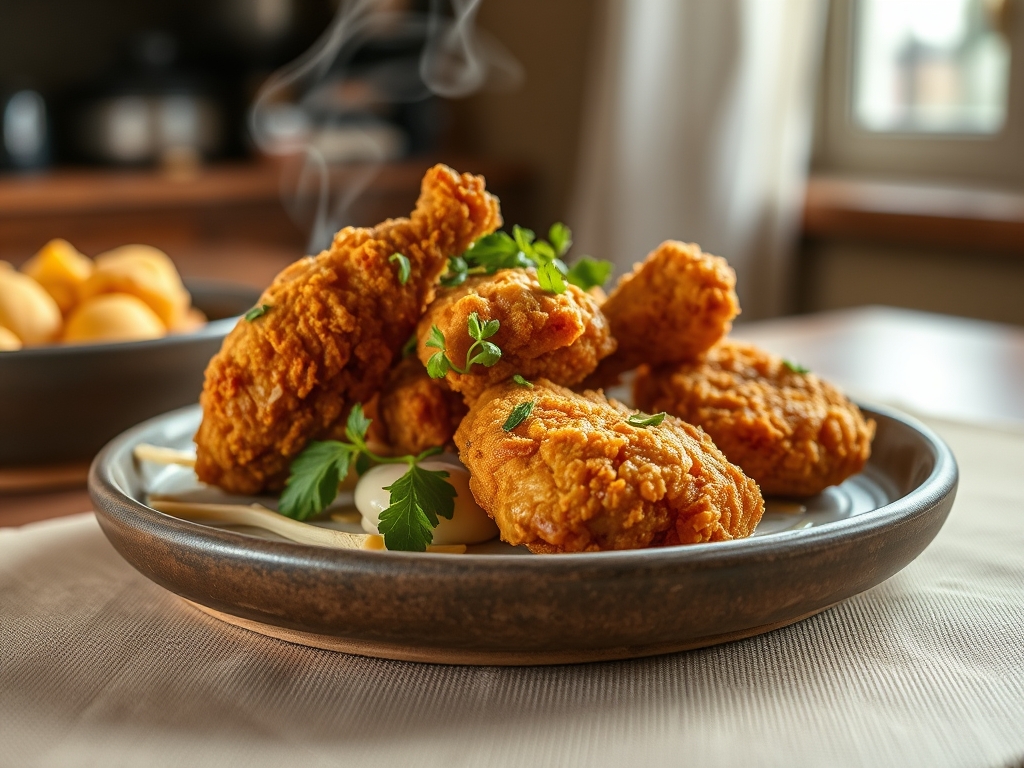
Referencing the Masterclass photo, you should see a variegated landscape of gold and deep brown. If your chicken looks pale and "dusty," your oil was too cold or your flour was too dry. To fix this, ensure you are using the "Hydration Technique" mentioned in Step 3. If the crust is dark brown but the meat is bloody at the bone, your oil was too hot. This results in a premature Maillard reaction. If the crust is flaking off in large sheets, you skipped the 15-minute rest period after dredging. The bond must be molecular.
THE DEEP DIVE
Macro Nutrition Profile:
A standard serving (two pieces) contains approximately 620 calories, 35g of protein, 40g of carbohydrates, and 32g of fat. The high fat content is primarily from the frying medium; using peanut oil provides a cleaner finish and a higher smoke point.
Dietary Swaps:
- Vegan: Replace chicken with extra-firm tofu (pressed for 2 hours) and use soy milk with apple cider vinegar as the buttermilk substitute.
- Keto: Swap flour and cornstarch for a 50/50 mix of almond flour and crushed pork rinds.
- GF: Use a high-quality 1-to-1 gluten-free flour blend and double the amount of cornstarch or potato starch.
Meal Prep & Reheating Science:
To maintain the molecular structure of the crust, never use a microwave. The microwave agitates water molecules, which migrate to the crust and destroy the starch bond. Reheat in an air fryer or oven at 200C (400F) for 8 minutes. This re-activates the lipids and drives moisture out of the crust, restoring the acoustic integrity.
THE KITCHEN TABLE
Why is my chicken dry despite the buttermilk?
You likely overcooked it. Use a digital probe thermometer to pull the chicken at 74C. The carry-over heat will bring it to the finish line without evaporating the internal juices. Precision is the enemy of dryness.
Can I use a skillet instead of a Dutch oven?
You can, but it is high-risk. Skillets have low walls, leading to significant temperature fluctuations and oil splatter. A heavy Dutch oven provides thermal mass, which keeps the oil temperature stable when the cold chicken enters.
What is the best oil for Fried Chicken Acoustics?
Peanut oil is the gold standard due to its high smoke point and neutral flavor. If allergies are a concern, tallow or lard provides an incredible savory depth, though highly refined canola oil is a functional, budget-friendly alternative.
How do I get the crust to stay on the chicken?
The "Resting Phase" is non-negotiable. After dredging, the flour needs time to hydrate and form a protein-starch glue with the buttermilk. If you fry immediately, the steam from the chicken will push the dry flour away.
Why add baking powder to the dredge?
Baking powder creates tiny carbon dioxide bubbles when it hits the hot oil. These bubbles expand the crust, creating a lighter, more aerated texture that shatters easily. It is the difference between a brick and a cracker.