Forget everything you know about those airy, cake-like imposters that masquerade as dessert in suburban bake sales. We are here to engineer a Dense Fudge Brownie that defies the laws of pastry physics; a slab of obsidian-dark cocoa so viscous it threatens to bend light. This is not a snack. It is a structural marvel designed to maximize the saturation of the palate through a precisely calibrated lipid-to-sugar ratio. When you bite into this matrix, you should feel the resistance of a high-density ganache coupled with the chewy resilience of a perfectly tempered sugar crust. We are aiming for a moisture content that borders on the illegal. We want a crumb so tight that it refuses to crumble, holding its form under the pressure of a serrated blade like a piece of culinary granite. This audit requires surgical precision and a total lack of respect for your daily caloric intake. We are building a monument to decadence, and the foundation is built on high-quality fats and the aggressive suppression of leavening agents. Prepare your workstation.
THE DATA MATRIX
| Metric | Specification |
|---|---|
| Prep Time | 20 Minutes |
| Execution Time | 35 Minutes |
| Yield | 16 High-Density Units |
| Complexity (1-10) | 4 |
| Estimated Cost per Serving | $1.15 |
THE GATHERS
Ingredient Protocol:
- 225g / 1 cup Unsalted European-style butter (82% butterfat minimum)
- 400g / 2 cups Superfine granulated sugar
- 120g / 1 cup Dutch-processed cocoa powder (22% fat content)
- 3 Large Grade A eggs (approx. 150g)
- 10ml / 2 tsp Pure Madagascar vanilla extract
- 3g / 0.5 tsp Fine sea salt
- 125g / 1 cup All-purpose flour (low protein preferred)
- 170g / 1 cup Bittersweet chocolate disks (60% cacao)
Section A: Ingredient Quality Audit:
Sub-par raw materials are the primary cause of structural failure in a Dense Fudge Brownie. If your butter is a standard supermarket brand with high water content, the excess steam will aerate the batter, leading to a cakey texture rather than a dense one. Fix: Render the butter in a saucier until the water evaporates before mixing. If your cocoa powder is natural (non-alkalized), the acidity will react with any trace leavening, creating lift. Fix: Exclusively use Dutch-processed cocoa to ensure a neutral pH and a deep, mahogany hue. Finally, if your eggs are cold, they will not emulsify with the fats. Fix: Submerge eggs in 40 degree Celsius water for five minutes to reach room temperature before incorporation.
THE MASTERCLASS
1. The Lipid-Sugar Fusion
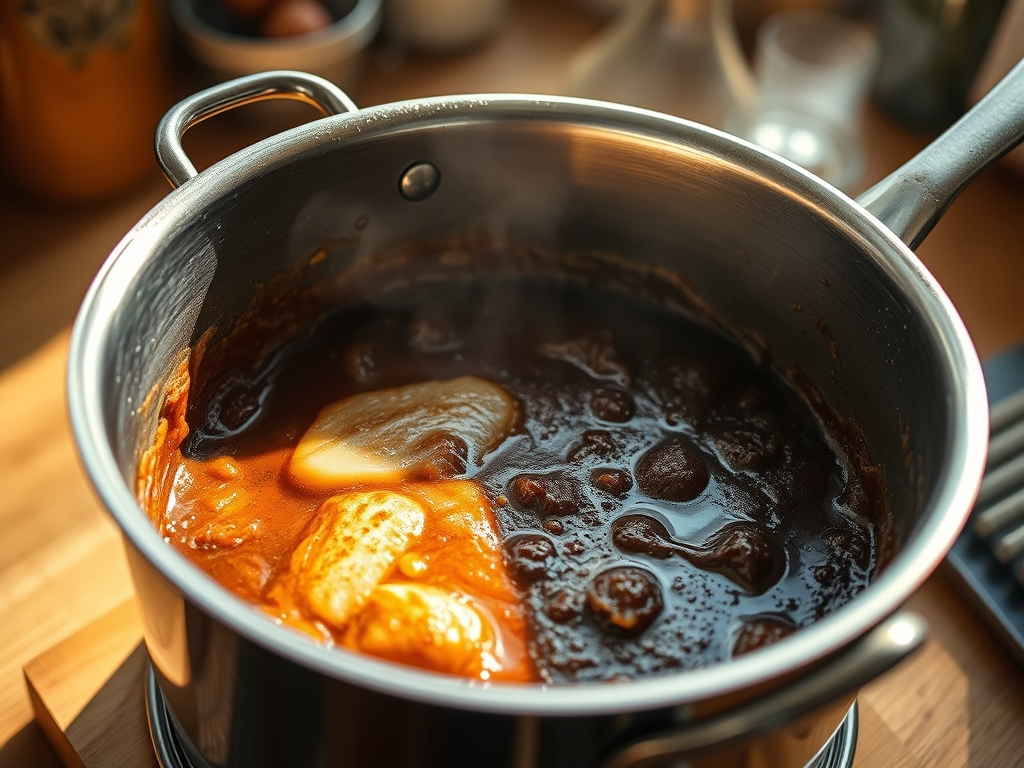
Place your butter in a heavy-bottomed saucier over medium heat. Once melted, whisk in the sugar and salt. Continue to heat until the mixture is glossy and hot to the touch; do not allow it to boil.
Pro Tip: This step is crucial for the "crackly top." Heating the sugar with the fat begins the process of dissolving the crystals, which eventually migrates to the surface to form a thin, meringue-like crust. Use a digital scale to ensure the sugar-to-fat ratio is exact.
2. Cocoa Saturation
Remove from heat and sift the Dutch-processed cocoa powder directly into the hot butter mixture. Whisk vigorously until the mixture is smooth and viscous.
Pro Tip: The heat from the butter will "bloom" the cocoa, releasing fat-soluble flavor compounds that would otherwise remain dormant. This creates a more intense, infuse-d chocolate profile without adding extra moisture.
3. Emulsification Protocol
Add the vanilla extract and the eggs one at a time. Use a silicone spatula to beat the mixture aggressively after each addition until the batter pulls away from the sides of the bowl and looks like polished silk.
Pro Tip: You are looking to create a stable emulsion. By beating the eggs into the warm fat, you are suspending the liquid in the lipids. A bench scraper can be used to clean the sides of the bowl to ensure every gram of protein is incorporated.
4. Folding the Matrix
Gently fold in the flour and the bittersweet chocolate disks using a "cut and fold" motion. Stop the moment the last white streak of flour disappears.
Pro Tip: Over-mixing at this stage develops gluten. Gluten creates a bread-like structure that is the enemy of the Dense Fudge Brownie. We want zero elasticity; we want a tender, fudgy collapse.
5. The Thermal Set
Pour the batter into an 8×8 inch pan lined with parchment paper. Bake at 165 degrees Celsius (325 F) for 30 to 35 minutes. The center should still have a slight wobble when shaken.
Pro Tip: Use an instant-read thermometer to check the internal temperature. For the ultimate density, pull the pan when the center reaches 88 degrees Celsius (190 F). Residual heat will finish the set.
Section B: Prep & Timing Fault-Lines:
The most common human error is the "Clean Toothpick Myth." If a toothpick comes out clean, you have overbaked the brownie into a dry sponge. The probe should emerge with moist, sticky crumbs attached. Another fault-line is the "Cooling Impatience." Cutting a brownie while hot destroys the molecular set, causing the fat to leak out. You must allow the pan to reach room temperature, then refrigerate for at least two hours before using a bench scraper or hot knife to portion.
THE VISUAL SPECTRUM
Section C: Thermal & Visual Troubleshooting:
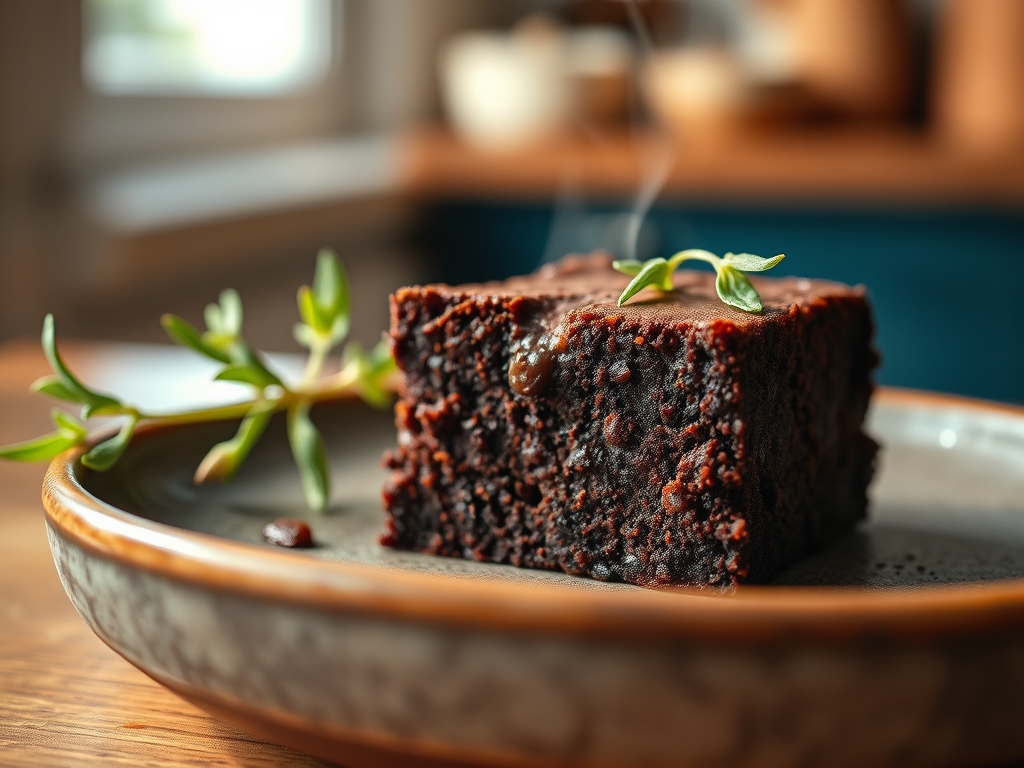
Observe the reference photo: note the micro-thin, translucent crust and the absence of air pockets in the cross-section. If your crust is matte and thick, you likely failed to heat the sugar-butter mixture sufficiently. If the top is dull, your cocoa was likely old or lacked sufficient fat. If the edges are significantly higher than the center, your oven temperature was too high, causing the perimeter to set and climb while the center remained raw. To fix uneven browning, use a heavy-gauge aluminum pan which conducts heat more uniformly than glass or ceramic.
THE DEEP DIVE
Macro Nutrition Profile:
This is a high-density energy source. Each serving contains approximately 340 calories, 18g of fat, 42g of carbohydrates, and 4g of protein. The glycemic load is significant; consume with tactical caution.
Dietary Swaps:
- Vegan: Replace butter with a high-fat vegan block (minimum 80% oil) and eggs with a commercial liquid emulsifier or 1/4 cup of silken tofu per egg.
- Keto: Substitute sugar with an erythritol-monkfruit blend and flour with superfine almond flour (increase almond flour by 20% to compensate for lack of starch).
- GF: Use a 1:1 gluten-free flour blend containing xanthan gum. The lack of gluten actually benefits the fudgy texture.
Meal Prep & Reheating Science:
To maintain the molecular structure, store brownies in an airtight container at room temperature for 3 days or freeze for up to 3 months. To reheat, avoid the microwave as it agitates water molecules and toughens the crumb. Instead, use a low-temperature oven (120 C) for 5 minutes to gently soften the fats without compromising the sugar crust.
THE KITCHEN TABLE
Why is my brownie oily on top?
The emulsion broke. This usually happens if the eggs were added to butter that was too hot, causing the fats to separate. Ensure the butter-sugar mixture is warm to the touch, not scalding, before adding proteins.
How do I get perfectly clean edges?
Refrigerate the block for four hours. Use a long chef's knife dipped in boiling water and wiped dry between every single cut. This melts through the fats cleanly without tearing the dense crumb.
Can I add nuts or swirls?
Yes, but keep inclusions under 100g. Excess additions disrupt the sugar-fat matrix and can cause the brownie to crumble. Fold them in at the very end with the flour to maintain structural integrity.
My brownies are too tall and cakey. Why?
You likely over-whisked the eggs or used Large-Plus eggs. Excess air or protein creates a foam that sets into a cake. Switch to a spatula instead of a whisk after the cocoa is added to minimize aeration.